
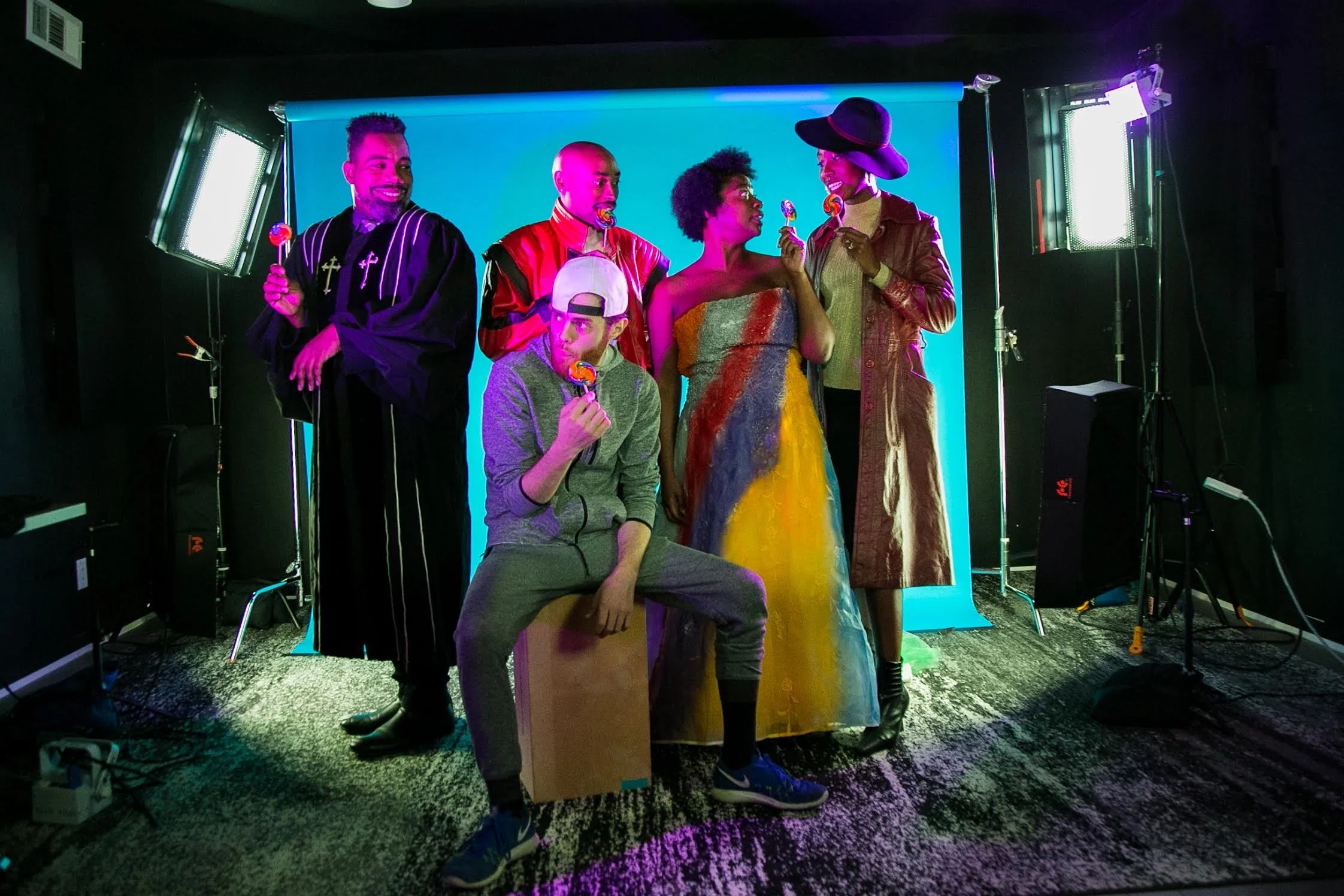
In ‘Bootycandy,’ Growing Up Black and Gay Is Sticky and Sweet in Gut-Busting Satirical Comedy
Playwright Robert O’Hara knew exactly what he was doing when he named his hit 2011 play “Bootycandy.” The provocative title generates interest and all kinds of assumptions about the semi-autobiographical comedy deeply entrenched in the Black queer experience. On May 14, Atlanta audiences will be able to experience O’Hara’s play when it opens at Actor’s Express.
”Bootycandy,” tells the story of Sutter (Damian Lockhart), who is on an outrageous odyssey through his childhood home, his church, dive bars, motel rooms, and even nursing homes. O’Hara weaves together scenes, sermons, and sketches to create a kaleidoscope that interconnects to portray growing up Black and gay.
Charlotte-based director Martin Damien Wilkins is at the helm of the Atlanta production. Wilkins has a long history with Actor’s Express and “Bootycandy,” having directed the show for Actor’s Theater of Charlotte in 2017. Like O’Hara, Wilkins is intentional about amplifying the Black gay experience in "Bootycandy," particularly after a 2017 performance where he says an audience member rejected the existence of a Black gay experience during a post-show talkback.

City Springs’ ‘The Color Purple’ with Black, LGBTQ Cast Is Too Beautiful For Words
It’s been 40 years since Pulitzer Prize-winning novelist Alice Walker released her magnum opus “The Color Purple,” and since then, the critically acclaimed novel has been adapted for the screen and the Broadway stage, winning the prestigious Tony Award for Best Revival of A Musical in 2016. Now, Walker’s story is being presented to Atlanta audiences in a new production at City Springs Theatre currently running through May 22, that harnesses the brilliance of Walker’s words, the cultural shift propelled by the film, and the unrestricted celebration of the Black and queer experience on stage.
With a soul-stirring score featuring jazz, ragtime, gospel, African music, and blues, “The Color Purple” tells the story of Celie (Felicia Boswell) in early 20th century Georgia as she is subjected to and ultimately triumphs despite physical, emotional, and sexual abuse at the hands of both her father and husband, Mister (Gavin Gregory). The all-Black cast and creative team are led by Kamilah Long (Oregon Shakespeare Festival), in a rare appointment as a Black woman director of a show traditionally led by white men.

Bravo Invites Black Matchmakers Into Spotlight In LGBTQ Inclusive Reality Series ‘Love Match Atlanta’
Dating in Atlanta is serious business. While many singles are swiping left or right on dating apps to find their person, those who can afford to are turning to Atlanta’s elite matchmakers to find love. And Black gay men are no exception.
On “Love Match Atlanta,” the new reality show debuting on Bravo on May 8, viewers are given a look into the professional and personal lives of a group of highly-sought after matchmakers as they use their charm and skill to compete for the hearts and dollars of Black Atlanta’s most eligible singles. The cast includes professional matchmakers and business owners Ming Clark, Joseph Dixon, Kelli Fisher, Tana Gilmore, and Shae Primus.
In a city that has developed a reputation for simultaneously being an oasis of Black wealth and opportunity, and for some Black gay men, a consistent disaapointement where quantity outweighs quality in terms of finding a potential partner, the dating experiences of both gay and straight singles in Atlanta provides more than enough source material for the one-hour show.
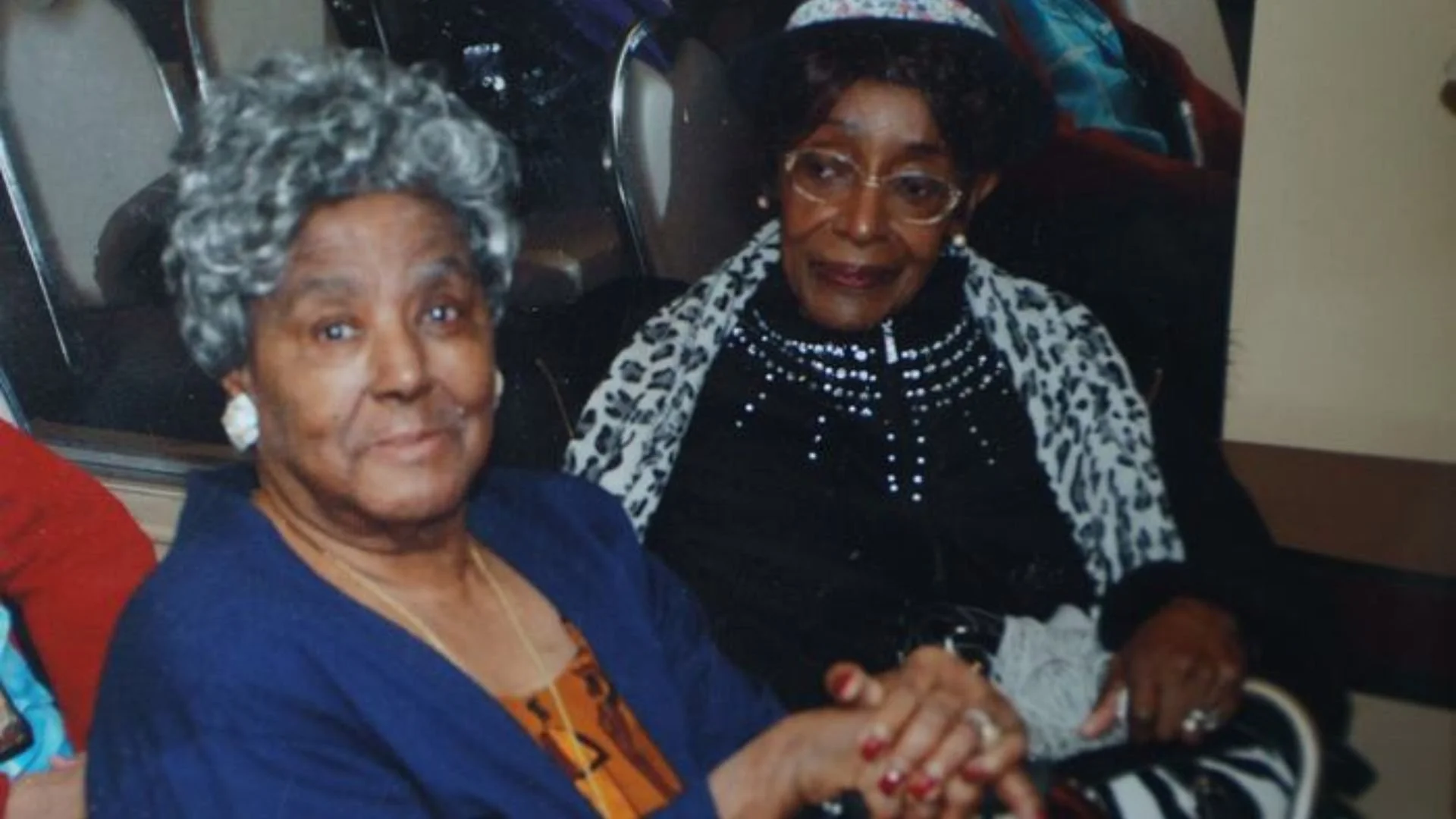
A Mother’s Love: Honoring the Fierceness of Dorothy Beam on Mother’s Day
For Mother’s Day, Johnnie Ray Kornegay III pays tribute to Dorothy Beam, the mother of celebrated Black gay anthologist Joseph Beam, whose devotion to her son's legacy transformed personal grief into a powerful act of advocacy. After Joseph's death from AIDS-related complications in 1988, Dorothy refused to let his unfinished work disappear; instead, she collaborated with poet Essex Hemphill to complete Brother to Brother: New Writings by Black Gay Men (1991), a landmark text in Black LGBTQ+ literary history.

Eight Black LGBTQ+ Podcasts You Should Add To Your Rotation
With so many podcasts to choose from, it can be incredibly difficult to listen to all the less-than-stellar podcasts to get to the good stuff. Similar to the Black LGBTQ+ blog explosion that occurred in the early aughts—if you have a computer, a microphone, and a closet to generate the best sound quality, anyone can produce a podcast. But it takes a unique personality along with great content and a distinct point of view to attract listeners and keep them engaged.
It should come as no surprise that Black LGBTQ+ podcasters are dominating the podcasting scene and are behind some of the most listened to and culturally relevant podcasts in the market today.
On The Reckoning, we’d like to eliminate the chore of listening to multiple episodes to determine if a podcast is a good fit. So we’ve compiled a list of eight Black LGBTQ+ podcasts that we think should be added to your rotation if they’re not already. While this list is not exhaustive, the consistency in publishing new episodes, along with dynamic content and consistently engaged listeners, landed all eight of these podcasts on our list. Get into our picks inside.

Understanding The Prevalence of LGBTQ+ Intimate Partner Violence May Help Combat Issue, Advocates Say
For most, intimate partner violence (IPV), historically known as domestic violence, is defined as some form of physical abuse enacted on a woman by a man in their life—usually their husband or boyfriend.
However, there is so much more to the issue that causes many experts to consider IPV an epidemic.
The recent altercations between Grammy award winner Kanye West and social media influencer, Kim Kardashian, in the wake of their divorce proceedings have ignited a new conversation about IPV.
According to Ruth Glenn, president, and CEO of the National Coalition Against Domestic Violence, the events surrounding West and Kardashian highlight the complications of people’s understandings and definitions of IPV, while at the same time shining a light on the contradictions and double standards.

‘When Boys Exhale:’ Reimagining of Classic Film Centers Black Gay Men In Atlanta Stage Debut
For many Black gay men, there are certain films in the Black theatrical cannon that continue to resonate decades after their release—” Waiting To Exhale,” the 1995 blockbuster based on the best-selling novel by author Terry McMillan and directed by Forest Whitaker, is one of those films. The impact of the original goes far beyond the popular gif of Bernadine (Angela Bassett) flicking a cigarette as she walks away from her husband’s torched luxury car. Now, writer and director Anthony Green (Cagebird Productions) is taking the commercial and cultural success of the film and adapting it for the stage in “When Boys Exhale,” an original reimagining centering the experiences of Black gay men inspired by the classic film.
After a sold-out premiere run in 2019 at Anacostia Arts Center in Washington, D.C, Green, in partnership with Tre Productions, is bringing “Exhale” to the Atlanta area on April 22. It’s an exciting time for the D.C.-based artist and his cast, who says he never imagined his play would mount a full production, only to have the pandemic completely halt all plans for the show’s immediate future.
“After we had those sold-out shows, we were going to do some more in DC because the demand was high, but then COVID hit and we had to cancel that, and I had to put When Boys Exhale on the shelf. I wasn't going to even touch it again,” Green says.
Upon learning the play’s origin, it’s plausible that Green’s “Exhale” would have been placed on the shelf following its initial success and not given a second thought by the man who penned the script.
2022 CNP Summit: Standing On The Bridge of Black Gay Legacy Work
“Black Is The Color of the Cosmos," was the theme for the 2022 CNP Summit, held virtually on Saturday and Sunday, March 19 and 20. In framing this year’s Summit, CNP offered the following quote to describe the work at hand; “So often, we’ve looked to the past, but where our liberation lies is in our future. This summit is for us to prepare for the movement of tomorrow.” While there is much within this quote to unpack, what resonates most with me is the pointed emphasis on the importance of preparation for [the movement of] tomorrow. In the simplest of ways, it all boils down to one significant point we’ve all seen and heard demonstrated time and time again; representation matters.
However, when it comes to the lives of Black queer people (and Black gay men in particular), there’s far more nuance and context to consider, simply because of how our existence has always been toyed with. Our Black gay lives have almost always had an ongoing (and extremely toxic) relationship with silence, shame, secrecy, and fear. Thankfully, that is why organizations like CNP and so many others exist; to combat such pointed attempts at erasure and humiliation, while ensuring that none of those attempts are successful in trying to dim our light or silence us, as they are structurally intended to do.

Bedroom Death: Experts Say Trauma, Shame Often Behind Libido Gaps for Black Gay Couples
Spring is known as the season for love for good reason. Everything around us is thawing out and firing up, including our moods thanks to a springtime burst of dopamine scientists say often sets the stage for romance. But for every couple that begins a five-alarm love affair in the spring, experts say there are many more that find themselves in dry dock.
Call it libido gap, a dead bedroom, or the more clinical term “sexual desire discrepancy.” By any name, the shortfall between how much physical intimacy two partners want is one of the biggest sources of tension in relationships.
“It’s a lot more common than most people will discuss,” says Machel Hunt, an Atlanta psychosexual therapist and one of two experts who spoke to The Reckoning about getting back that lovin’ feelin’.
The cause of a libido gap can be physical, such as hormone imbalances or other conditions that lower desire. Other times the cause is mental, including stress and a history of subtle sexual trauma experts say can be particularly common among gay men.

In ‘BLACK AS U R,’ LGBTQ Filmmaker Micheal Rice Turns A Rageful 2020 Into A Gripping Documentary
For Black gay filmmaker Micheal Rice, 2020 was a tipping point.
Like the rest of the world, the Brooklyn-based documentarian (“party boi,” “black diamonds in ice castles”) began the first quarter of 2020 avoiding transmission of the coronavirus by isolating himself under strict quarantine guidelines by state and federal officials as COVID-19 cases and deaths in New York City soared. It was a safety precaution implemented to curb the spread of one deadly virus while another continued to rage, leaving Rice and other Black and queer people susceptible to state-sanctioned violence and a never-ending loop of Black trauma on the evening news. Although Rice says he felt powerless at the time, he knew he had to use his artistry to respond. “Black AS U R,” Rice’s new documentary film premiering at Outfest Fusion QTBIPOC Film Festival in April, is his response.
“BLACK AS U R” weaves through the complexities of Black queerness by taking audiences on a journey through the homophobia that penetrates many Black spaces. The film examines the impact of HIV stigma, sex work, suicide, bullying, and acts of violence against Black trans people, including the vicious mob attack of Iyanna Dior at a convenience store in St. Paul, MN only days after the fatal killing of George Floyd in neighboring Minneapolis. The film also features the first time a documentary has highlighted the story of Dominque Rem’mie Fells, a young Black trans woman whose murder reignited the “Black Trans Lives Matter” movement of 2020.
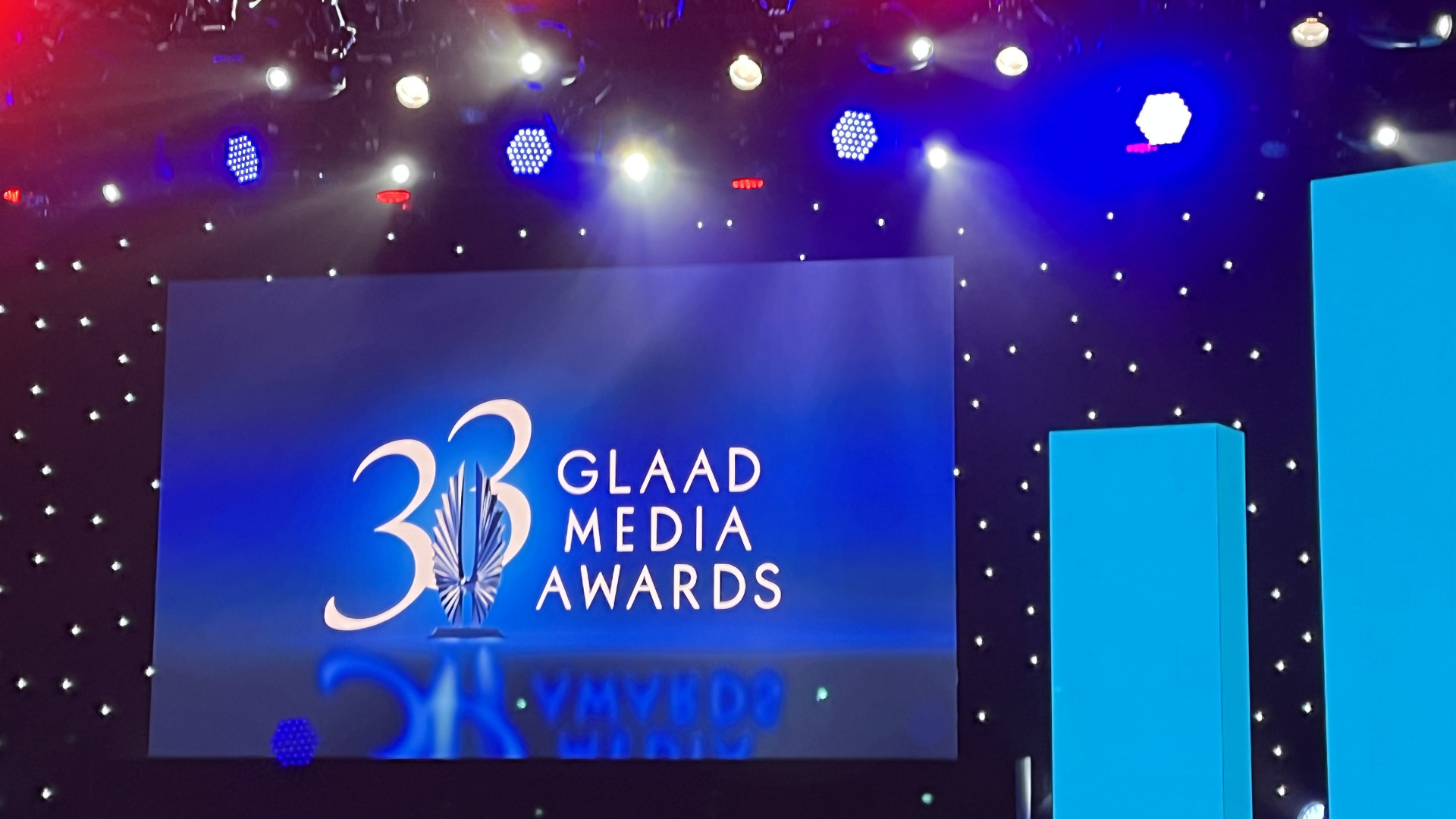
Michaela Jaé Rodriguez, LGBTQ+ People of Color Shine at 33rd GLAAD Media Awards in Los Angeles
The 33rd GLAAD Media Awards returned to The Beverly Hilton in Los Angeles on April 2, 2022, and for one night, the room belonged to us. The Reckoning's Darian Aaron captures the full sweep of an evening where LGBTQ+ people of color took center stage, from Michaela Jaé Rodriguez's tearful acceptance of the Stephen F. Kolzak Award to Marvel's Victoria Alonso putting Disney's Bob Chapek on notice, all set against the backdrop of a country rapidly moving to erase queer and trans lives through legislation.
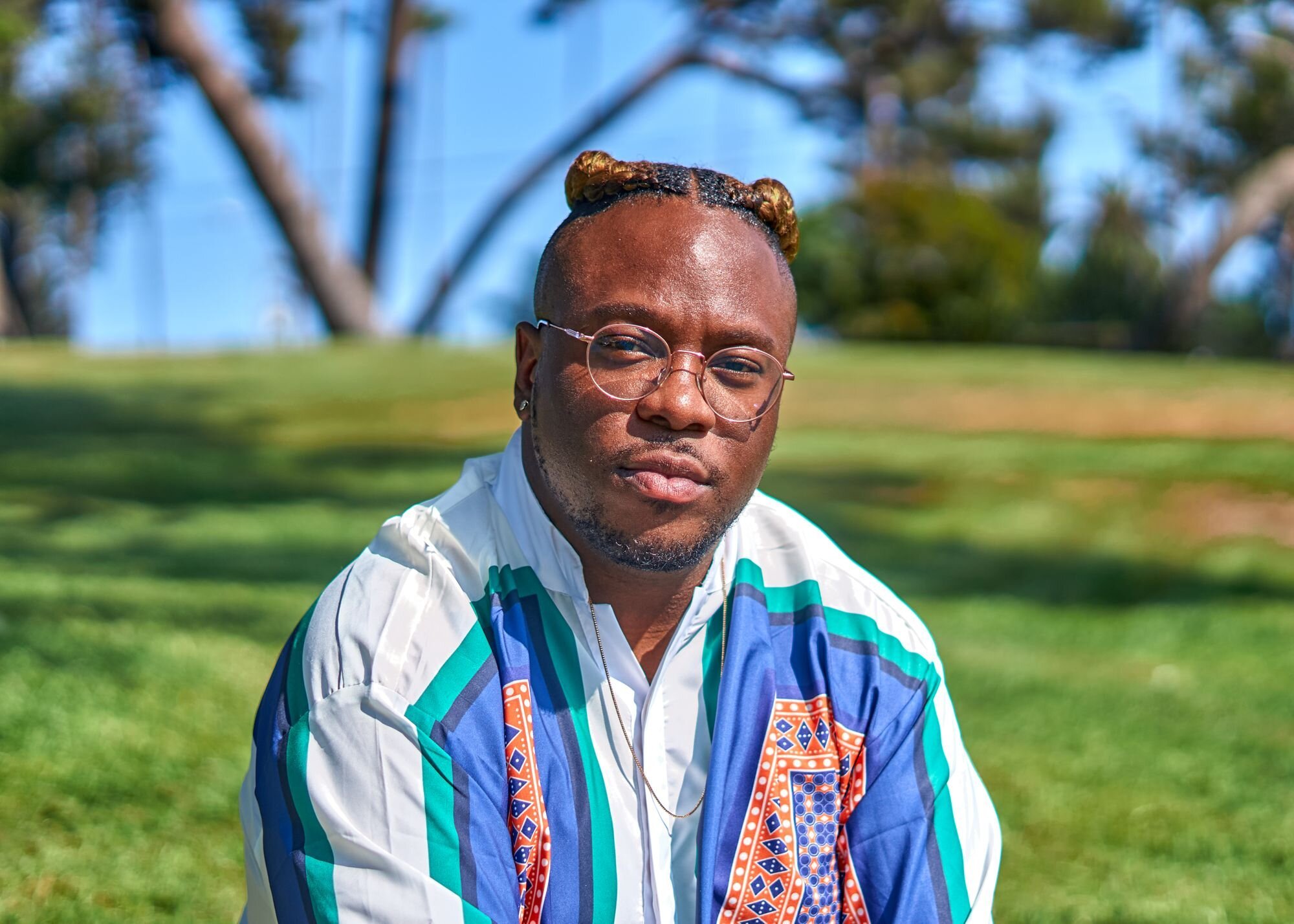
LGBTQ Author Gerrick Kennedy Talks Final Encounter with Whitney Houston that Led To New Book
A decade ago, Gerrick Kennedy was unexpectedly thrust into the spotlight.
He was in Los Angeles covering the annual Clive Davis Pre-Grammy Party. He had worked feverishly to convince his editors that it was worth covering the reunion of Brandy and Monica. They were set to perform their newest duet, “It All Belongs to Me.” It was their first performance together since the release of their Grammy award-winning hit, “The Boy is Mine.”
He was sitting with the ladies and Davis when out of the corner of his eye he saw her; one of his biggest idols, Whitney Houston. She had appeared from out of nowhere. The next day, news broke that she had died in the bathtub of her hotel room.
“I was thrust into the spotlight because I was on the scene that weekend,” Kennedy told The Reckoning. “To get a story like that! That was a breakout year for me.”
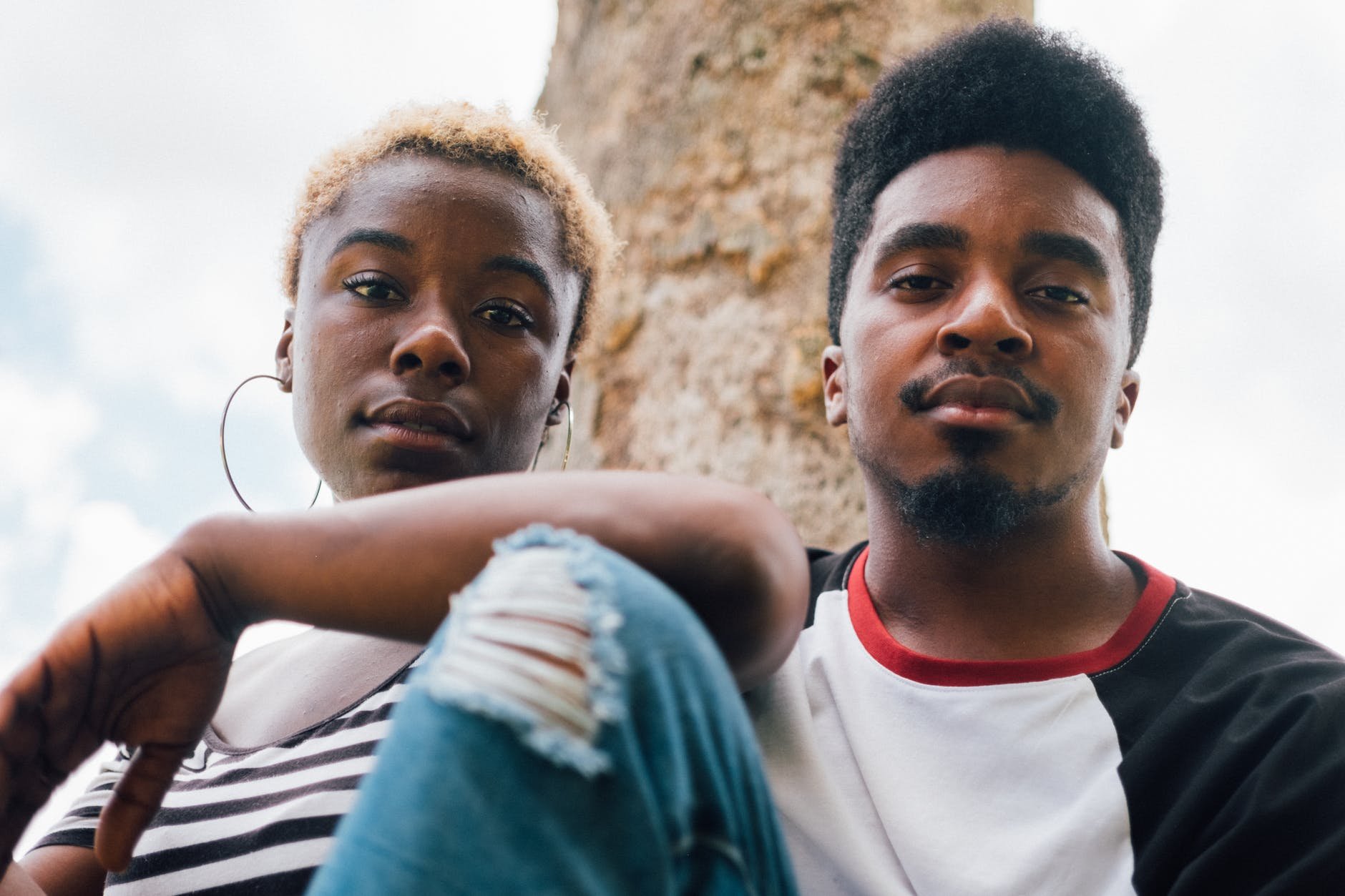
LGBT Detroit Tackles Stigma, HIV Decriminalization On College Bus Tour
When LGBT Detroit kicks off their “Sex, Hooking Up, and The Apps” four-day college bus tour on March 29, they will do so in the tradition of famous Black Detroiters who boarded buses and traveled across the country decades earlier to spread a sound that defined a generation. And while this new tour may be less flashy than a Motown revue, it is no less vital to the culture.
Originally launched in 2019, this year's bus tour is the second outing for LGBT Detroit and their ongoing effort to educate Michigan’s Black LGBTQ+ population on the facts about HIV prevention, transmission, and the state’s newly reformed HIV criminalization law.
The updated Michigan law, signed by former Gov. Rick Snyder, requires the person living with HIV to tell their sexual partner their status before having vaginal or anal sex unless they are undetectable and have no intent to spread the virus. Unlike the previous law, which charged the person living with HIV with up to a 4-year felony sentence for not disclosing their status before penetration — no matter their detection.

Staying In The Race: What Black LGBTQ+ People Need To Know About The Metaverse and New Technology
Does it surprise you that the concept of digital currency dates back to the early 1980s and the first digital currency emerged in 1995? I’ve always had a passing knowledge of emerging technologies, but I felt like cryptocurrency snuck up on me. DigiCash, founded in 1994, “set out to create a mechanism for consumers to make ‘micropayments’ for online transactions—such as purchases of individual articles or music singles. Unlike credit cards, which reveal a buyer's identity to vendors, DigiCash's encryption would have made its electronic money as anonymous as cash.” This information blew me away.
Like for many, Bitcoin seemed to come out of nowhere. For me, it was a confusing concept. The idea of a form of digital currency operating outside of a traditional banking system was a lot to wrap my head around. It was something I tried to look away from, but as Bitcoin began to make way for cryptocurrency millionaires, it became harder to ignore.

Never Enough Time: Black Gay Men Grieve, Rebuild After Unexpected Parental Loss
At 52 years old, Jay Torrence, better known to most as Jay King Holliday, considers himself an orphan.
In the last 10 years, the co-creator and co-founder of the annual spring break gathering, Big Boy Pride, has had to bury both his mother and father. His father, whom he admits he hadn’t always had the closest relationship with, died from cancer in October 2012. His mother, and the person he still considers his best friend, died suddenly in December 2019.
“There is something really confusing about it—being without both of my parents at 52. I am a 52-year-old orphan,” he proclaimed to The Reckoning. “It doesn’t seem that it should be as impactful as it is, but it is—coming to terms with the reality that I’ve lost a lot of my legacy. The people who connect me to my history are no longer present.”
Most of those who have experienced the loss of a parent admit that it changes them. The pain never goes away, and the loss creates an unfillable void. For Holliday, a New York native now residing in Atlanta, the losses have had a unique effect on him. Prior to his father’s passing, they had time to heal.

Despite What You May Have Been Told, Your Queer Sexuality Is Sacred
Monroe Howard-Shackelford, a D.C.-based licensed psychotherapist, is reframing the way Black queer men view their sexuality through a series of “Sacred Sexuality” virtual workshops and a recent in-person presentation at the 2022 NAESM Conference.
Howard-Shackelford says he never heard anti-gay sermons in the church he grew up in, but the message was clear about how society and the traditional Black church felt about LGBTQ+ people. Any romantic relationship or sexual desire that dared to exist outside of the heterosexual binary of traditional marriage was to be demonized. For many Black queer men, the messages received from the pulpit are often in direct conflict with their truth, making it nearly impossible to experience organized religion without harm being inflicted.
For some LGBTQ+ people who are deeply entrenched in the Black church experience, the concept of queer sexuality being sacred can be jarring, if not completely foreign. Sexuality is sacred on its own, and that includes Black queer sexuality, says Howard-Shackelford.

Your Skin Is Valuable: Black, LGBTQ Tattoo Artists Overhaul a Whitewashed Industry
When most people envision a tattoo artist, the image of a white male—probably young, possibly a metal fan, and unquestionably heterosexual—comes to mind.
And then there’s Oba Jackson, a tattoo artist flying in the face of expectations both inside and outside the industry.
He’s big—6’3” to be exact—with a penchant for unique fashion a la Grace Jones. He’s unapologetically Black, his social media peppered with “power to the people” fists and exclamations against racist stereotypes in tattooing. He’s gay, looking forward to his 15th anniversary with his hairstylist husband, this spring.
Perhaps most importantly, he’s the owner of Push Tattoo Studio, a Wilmington, Del. shop working to create more inclusion in an industry that’s long been considered a white boy’s club.

Actor James T. Lane Is ‘Uniquely Qualified’ To Tell Story of Troubled Singer In ‘Ain’t Too Proud’ Musical
In the first national tour of “Ain’t Too Proud: The Life and Times of The Temptations,” Broadway actor James T. Lane, 44, transforms into Paul Williams, the embattled original lead singer, and choreographer of the legendary Motown singing group. The tour will begin a six-day residency at Atlanta’s Fox Theatre on March 8. Nominated for 12 Tony Awards, and winner for Best Choreography, “Ain't Too Proud” tells the thrilling story of brotherhood, family, loyalty, and betrayal, as the group's personal and political conflicts threatened to tear them apart during a decade of civil unrest in America.
For eight shows a week, the openly gay actor embodies the highs and lows of a tortured artist incapable of escaping his own demons. It’s a story that parallels a period in Lane’s life that makes his casting feel more like a divine assignment than an additional credit on an already impressive resume. From the moment he showed up to audition for the role, to belting out Williams’ signature song, “For Once In My Life,” Lane has been appointed for such a time as this.
“The final audition was an in-person audition in New York City at Pearl Studios and there was no one there for the role,” Lane says. “I don't know what was happening, but I was the only one there. I couldn't get through the song [“For Once In My Life”] in the audition without bursting out into tears because it just meant so much,” he said.
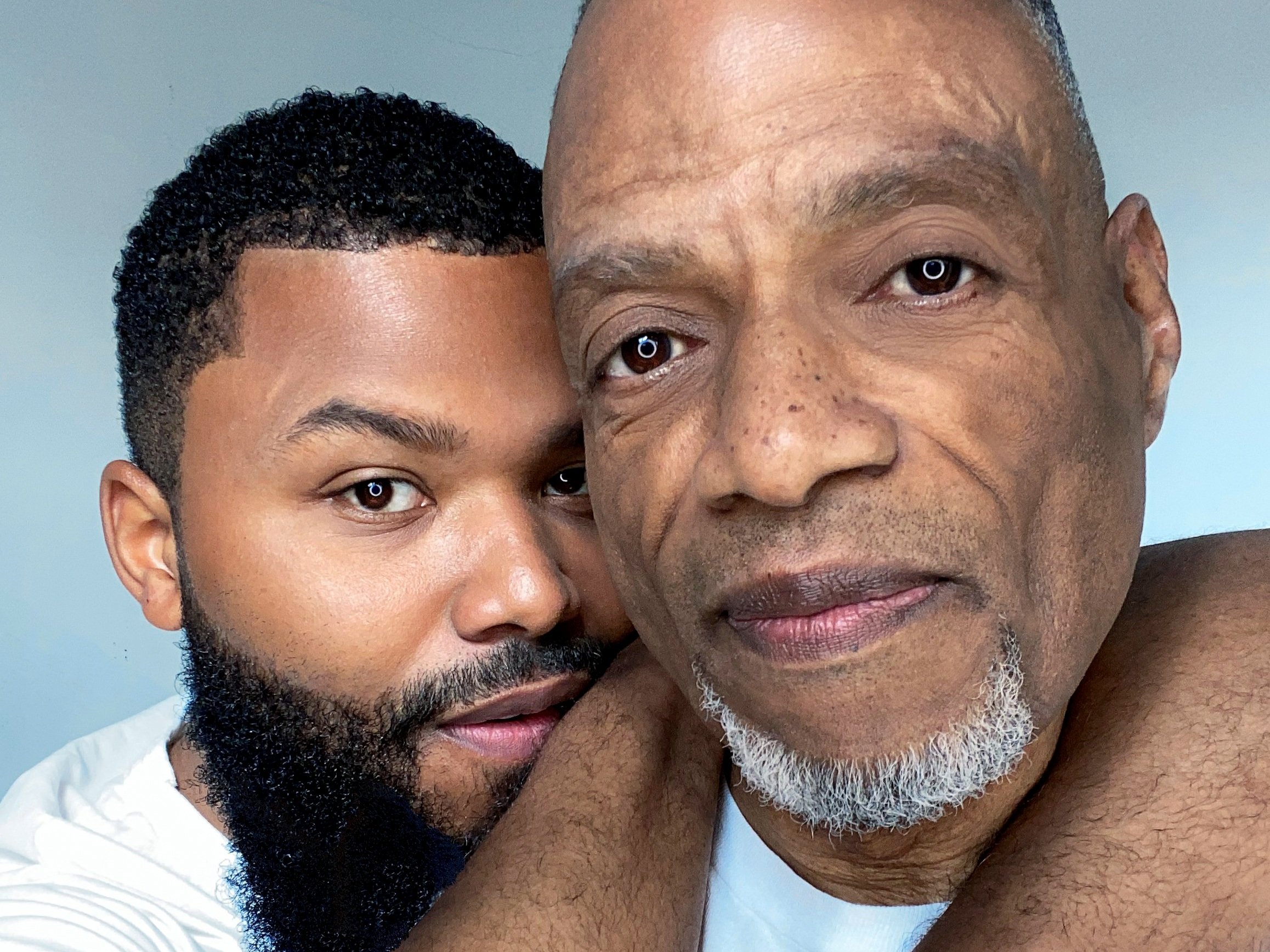
The 26 Year Age Difference Between This Black Gay Couple Created An ‘Opening Of Peace’
Author Doug Cooper Spencer, 67, almost let the opportunity to fall in love again pass him by. In 1998, sitting in Fountain Square, a busy plaza in downtown Cincinnati, as he continued to work on his first novel, he noticed someone walking by.
“I saw these nice legs walk past, and I glanced at them, like, ‘Oh, he’s got nice legs.’ That's it—because I'm an introvert,” he said.
Doug had dissolved a relationship a year and a half prior and wanted to focus on writing. While glancing up from the legs that caused his temporary distraction, he caught the eye of the person to whom those legs were attached.
“He catches me [looking up] and he stops and I'm like, oh God, here we go. No, I do not want to be bothered,” Doug recalls thinking to himself.

In Feature Film Debut, Brandon Black Plays Openly Gay Character in Tyler Perry’s ‘A Madea Homecoming’
Actor Brandon Black (“Dear White People,” “Insecure”) is aware that his performance in Tyler Perry’s new film “A Madea Homecoming” as the first openly gay character in the history of the 23-year-old franchise is bigger than entertainment.