How An Open Talk About PrEP Transformed a Mother-Son Bond into Advocacy
When his mother called, Sidney Keys III had just gotten back to his dorm room at American University in Washington, D.C.
He had been in class and missed her earlier calls from Atlanta. So when he finally called back, his mom, Winnie Thompson, was waiting to tell him something she apparently couldn't wait to share.
“Hey, kid, I have something to share with you,” Keys remembers her saying.
Then she started talking about PrEP. And talking. And talking.
Mother told son about websites detailing the breakthrough drug that can prevent transmission of HIV. She had resources. Statistics. She had learned about pre-exposure prophylaxis, the medication that can prevent someone who does not have HIV from acquiring the virus, through her work, and she wanted him to know about it, too.
Keys, a rising junior at American, paid attention — sort of — and definitely didn’t roll his eyes.
“I’m listening, you know, ‘I hear you,’” he recalled. “But at the same time, I’m like, ‘Mama, what am I supposed to do with this information?’”
In his head, another question was forming: “What blog post did she read?”
In other words, it was a fairly ordinary moment between the two. Thompson is very protective of her only son, and Keys, 20, knows that when his socially-conscious mom discovers Something Important on the Internet, he’s going to have to listen for a minute.
But Thompson had actually discovered something important. Sidney fits a demographic that can easily tune out conversations about HIV prevention: He is young. He is Black. And he is a straight, cisgender man.
For decades, HIV has been closely associated with gay and bisexual men. That’s because men who have sex with men remain the population most affected by HIV. In 2024, male-to-male sexual contact accounted for 65% of HIV diagnoses in the United States and its territories. Among young men ages 13 to 24 in that category, nearly half of diagnoses were among Black men.
But HIV is not exclusively an LGBTQ health issue.
Breaking the “Not Me” Mindset
In 2022, heterosexual contact accounted for 22% of new HIV diagnoses, including 2,660 diagnoses among men; yet earlier CDC data found heterosexual contact accounted for 15% of HIV diagnoses among Black men. The racial disparity cuts across sexual orientation: although Black people make up about 12% of the U.S. population, they accounted for 39% of HIV diagnoses in 2024.
That makes Keys precisely the kind of person his mom thinks the conversation should reach — not because she was making assumptions about his sex life, but because she wasn't.
“You're 20 years old and you're in college,” Thompson said of the thinking behind the conversation. “Whether you're active or not, this is the point, right?”
PrEP is intended for people without HIV who may be exposed to the virus through sex or injection drug use. When taken as prescribed, it greatly reduces the chance of acquiring HIV.
For Sidney, however, the breakthrough wasn't simply learning what the medication did. His initial reaction — “What does this have to do with me?” — might be the problem. The people who could benefit most from PrEP are often the least likely to get it.
In 2025, Black Americans accounted for 39% of new HIV diagnoses but just 15% of PrEP users; white Americans, by contrast, represented only 21% of new diagnoses but 63% of PrEP users. Another measure makes the disparity even starker: in 2024, there were nearly 42 white PrEP users for every new HIV diagnosis among white people, compared with fewer than six Black PrEP users for every new diagnosis among Black people — a more than sevenfold difference.
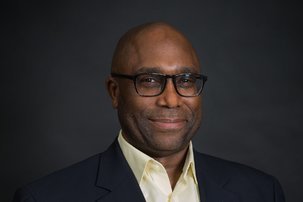
Winnie Thompson and her son Sidney Keys III (Image courtesy of subject)
Researchers point to barriers including stigma, unequal access to healthcare, affordability problems, and limited awareness — the key reason Winnie phoned her son.
“Once I kind of took myself out of it and realized that other men, you know, in my place will have that kind of same interaction,” said Keys, who is following in his mom’s socially conscious footsteps, “That's when I realized that that could be a problem.”
The prevention conversation is also changing.
From Skeptic to Campus Advocate
PrEP was once largely synonymous with a pill taken every day. Injectable options have since expanded the choices. And in 2025, the FDA approved lenacapavir for HIV prevention, an injection administered just twice a year. The CDC subsequently strongly recommended it as a PrEP option, citing evidence of its effectiveness and safety.
That matters because a prevention drug works only if people use it, and awareness is only half the battle.
CDC researchers noted that roughly half of people taking daily oral PrEP discontinue it within six to 12 months, making a twice-yearly option potentially important for people who struggle with taking a pill every day — or want to avoid the stigma of guests seeing a bottle of PrEP in their medicine cabinet.
But medication cannot prevent a virus someone does not believe they are at risk of acquiring.
That is where Sidney has begun to find his role. He’s had conversations about PrEP with his college friends since this talk with his mom — Black men and women — and says their first reaction sometimes looks remarkably familiar.
“They're looking at you weird,” he said. As his mom did with him during their first call about PrEP, Keys keeps talking to them anyway.
He educates. He talks about the stereotypes surrounding HIV and about making prevention “more accessible.” He says PrEP conversations should include people who might assume the message is meant for somebody else.
The reluctant son has become something of an evangelist, a lot like his mother. She has her own motives for educating her son with frank talk about unforeseen circumstances — and consequences — of sex as a young person.
Winnie Thompson and her son Sidney Keys III (Image courtesy of subject)
"Each One, Teach One": A Philosophy of Prevention
Winnie Thompson became a mother two weeks before her 17th birthday.
Her own mother was a single parent who raised three children and worked long hours in media and communications. Thompson doesn't fault her. But sex, pregnancy and sexual health were not regular topics of discussion between mother and daughter.
“My mom didn't talk to me about abstinence, or even having to talk about pregnancy,” Thompson says. “She didn't talk to me about it until after I was already pregnant.”
The experience helped shape the kind of parent she wanted to become.
She deliberately sought jobs that gave her enough flexibility to be present for her son. She talked with him about dating, drugs, and alcohol rather than simply handing down prohibitions.
“I didn't feel like I wanted to be one of those parents to just say, ‘Don't do it,’” Thompson said. “Because I feel like when you tell people don't do something, that makes them want to go and touch the stove.”
Years before the PrEP conversation, Thompson insisted that her son take Narcan to college — not because she believed he used drugs, she says, but because someone in his residence hall might someday overdose and need it.
Sidney protested that one, too. They argued about it while picking up supplies for the coming school year. He objected to spending $60 on something he’d never use. She urged him to look beyond himself. Sidney fumed. The Narcan went into the shopping cart.
Eventually, though, he understood.
“It might not be for me,” Keys says of the larger lesson his mother has taught him. “I think that was something that I was able to learn.”
That instinct — looking beyond himself — fits with the life Keys is building.
He is pursuing a degree in secondary education and literary studies and hopes eventually to become a school superintendent. He and his mother also have built Books N Bros, a literacy project centered on Black boys and representation in books and literature. Now he sees HIV education as another part of that mission: helping young Black people acquire information they can use to protect themselves.
For Winnie, the circle is even wider.
As a mother at 16, she is often the youngest in a room full of parents. Her son's friends text her. Some talk to her about things they can't comfortably discuss at home. Thompson considers that access a responsibility — perhaps even a “superpower.”
“Sidney's not my only responsibility — he's my first responsibility as my oldest child,” she said. “But I think that I've felt charged to kind of be a safe space, even for his peers and for his friends.”
That may ultimately be the lesson inside one slightly awkward phone call between a mother and her son.
Thompson learned something that could protect her son, so she told him. Keys learned something from his mom that could protect his friends, so he started telling them. Just like the African proverb: Each one, teach one.
“No matter how old he gets, I'm always going to go to bat for him,” Winnie says.