

A Quick History of Black Queer Characters in Horror
Thanks to the recent success of Jordan Peele’s Get Out and Us, Black horror has become a force to be reckoned with in the horror genre. The subgenre has always been there, but not taken seriously outside of the mainstream horror audience and academics alike. Although there were several pieces written about black inclusion, or lack thereof, throughout the years. A quick Google search for “Black Horror” pulls up a lot of these pieces, as well as suggested watching lists that chronicle not only black participation in horror, but the history of black horror itself. However, when you do a quick Google search with the terms “Black gay horror,” you will find little to nothing concerning the black queer experience in horror.

With 17 Years of Experience in Education, Jason B. Allen Seeks to Fix Atlanta Public Schools Issues
When he was in the fifth grade at F. L. Stanton Elementary School, Jason B. Allen led a group of classmates in a community service activity.
His teacher at the time overheard him venting about what was happening in the community and how he felt like no one cared about its upkeep.
“She, Miss Edwards, who is still teaching today, inspired me to do something about it,” Allen told The Reckoning. “Instead of going to Six Flags for a class trip, we cleaned yards, cut grass, and picked up trash.”
There he was at ten years old, leading his classmates and helping to sustain the community. Today, Allen is one of two candidates seeking to replace Jason F. Esteves, the current board chair of the Atlanta Public Schools Board of Education, as the at-large District 9 representative. D’Jaris ‘DJ’ James, founder of a college and career coaching program, Secrets of a Southern Belle & Gent, is the other candidate.
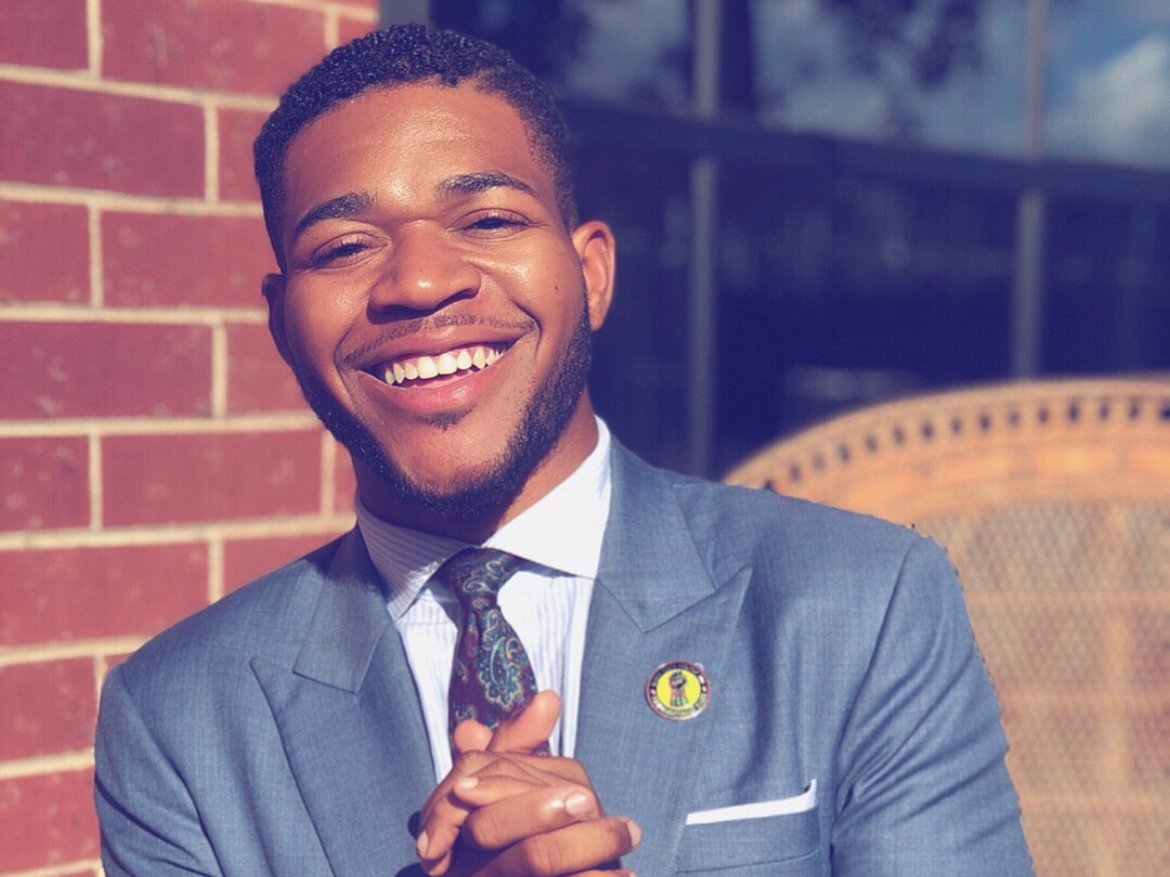
Running for Atlanta City Council A ‘No-Brainer’ for Devin Barrington-Ward
When a young 12-year-old boy, reportedly named Tyler, was ridiculed live on social media for being effeminate, Devin Barrington-Ward was one of the first community activists to reach out in support of the pre-teen.
He reached out, he told The Reckoning, because there is a lack of safety nets available to young people like Tyler.
“There are countless young people like Tyler who are Black and LGBT who need an advocate and someone to care.”
Barrington-Ward is one of a handful of LGBTQ+ individuals running for Atlanta City Council. He is looking to unseat the incumbent Councilmember Dustin Hillis for the District 9 seat.

‘For The Boys’ Is The Black Queer Web Series We’ve Been Waiting For
Ever so often, a piece of art is created that causes a cultural shift—an unexpected, yet welcomed reflection of the lived experiences of a segment of society that is often overlooked, if not outright dismissed by media gatekeepers. “For The Boys,” the hit SLAY TV web series now streaming on YouTube from co-creators Mekhai Lee and Ellis Dawson, is filling the void of Black queer representation on a scale that has surpassed similar projects online, and is inching closer to achieving the kind of cultural impact on a new generation of Black queer audiences not seen since the early 2000s.
“For The Boys” follows three Black queer best friends as they navigate the intoxicating and exhausting minefield of love and friendship in New York City. Set in Brooklyn, the series follows the lives of Anthony (Chandler Bryant), Jamal (Andrew Coleman), and Syed (Lamont Walker II), each on their own roads to personal self-discovery and fulfilling relationships.
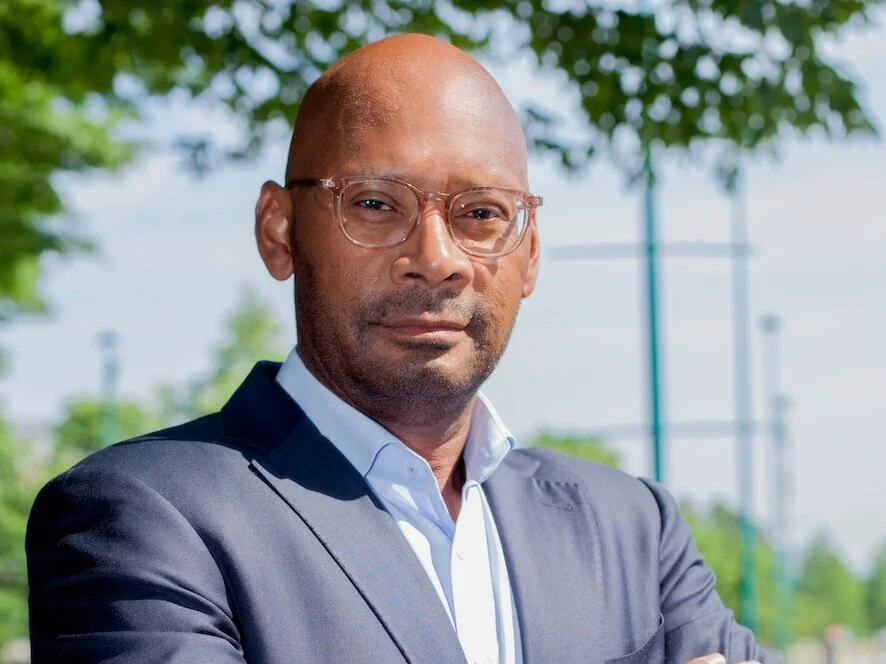
As City Council President Mike Russell Pledges to Listen and Formulate Solutions
Mike Russell easily admits he is not a politician.
He is a retired military officer with a background in law enforcement who moved to Atlanta, in large part, due to its civil rights history.
But last summer, after people took to the streets to march and riot in cities across the country, Russell found himself increasingly upset as he watched what has been described as an uprising in downtown Atlanta.
“It was really upsetting,” he told the Reckoning. “So much so that I started yelling at the television. My husband kept saying to me, ‘You do know they cannot hear you. If you are really this upset, get involved.’”
He did but started out slow.
“As I started expressing my ideas and frustrations on social media, people took notice and began suggesting that I run for office,” he said.

Aging Out: A Look At The Shifting Black LGBTQ+ Social Landscape
Then just a fresh-faced youth, Atlanta lesbian Charlotte Hubbard spent her early 20s attending the city’s legendary Black gay pride celebration — one of the few places where she felt she could truly exhale.
“I loved just being in a place where I’m not seeking acceptance,” Hubbard says. “Just being able to be free felt really good.”
Then something shifted. Fist fights seemed to rise. The carefree vibe seemed to diminish. Eventually, for Hubbard, it stopped feeling like home.
“The turning point was when I was at Piedmont Park and every other corner I turned, there was a fight,” says Hubbard, who at 37, hasn’t attended Black Pride in a decade. “I said, ‘I can’t do this’.”
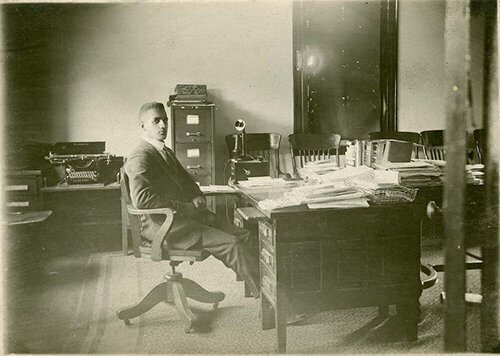
Norris B. Herndon Remains the Black Gay Millionaire ‘Nobody Knows’
Norris Bumstead Herndon grew up in a shadow as broad as Georgia. Yet he could only live up to his father and society’s expectations by shrinking himself.
“Norris was a young man coming of age and struggling with his homosexual identity,” historian Carole Merritt wrote in her 2002 biography, “The Herndons: An Atlanta Family.”
“With a father who insisted upon a straight and narrow course and in an early 20th-century society that had no tolerance for what it considered deviant, Norris would have to deny himself. He would assume a compromised selfhood, his sexuality arrested, denied, or expressed in secret.”

Atlanta School Board Candidate Bethsheba Rem Seeks to Inform Parents, Empower Students
During a random conversation at an event in early May, Bethsheba Rem found herself assessing her life. She met someone who mentioned they were recruiting people interested in being campaign managers or running for local office.
“I told him I am a professor and spoken word artist when he asked what I did for a living,” she told The Reckoning.
Without missing a beat, he suggested that she run for the school board.
“In two seconds, I assessed my whole life,” she said. “I took an inventory of where I am and what I have done. For me, I am either going to do something 100 percent, full speed ahead, completely all in, if I believe in it.”
In those two seconds, running for Atlanta School Board made sense.

Turning The Tide Against HIV: 2022 NAESM Leadership Conference To Unite Black, Gay And Bisexual Men To Address Epidemic
NAESM exists to serve Black, gay and bisexual men. Full stop. This tenet has been central to the organization’s mission in the fight to reduce new HIV infections and to provide care for those living with HIV, including Atlantans who do not exist within the targeted group for over 30 years. It’’s with the same laser focus on Black, gay and bisexual men, one of the most heavily impacted groups by HIV, that NAESM’s African American MSM Leadership Conference on Health Disparities and Social Justice, the nation’s largest annual convening dedicated to exploring HIV prevention, care, treatment, policy, and research, will escape the cold of the Southeast in January for the warmth of sunny Los Angeles.

The Tarell Alvin McCraney Interview: Academy Award-Winner Reflects On The Fifth Anniversary Of ‘Moonlight’
To say that 2016 was a whirlwind for Academy-Award-winning screenwriter Tarell Alvin McCraney would be an understatement. Five years after the film release of “Moonlight,” based on McCraney’s play “In Moonlight Black Boys Look Blue,” and four years since taking home the top prize of Best Picture during an unprecedented live television mix-up—McCraney’s ascension from Liberty City, Florida, to Chair of Playwriting at The David Geffen Yale School of Drama, to creating the OWN series “David Makes Man”—now in its second season — has made the MacArthur “Genius” Grant recipient a creative force of stage and screen. In his first interview with The Reckoning, McCraney opens up about his queer identity, collaborating with director Barry Jenkins to create a masterpiece, being awkward and reveling in going unnoticed on the street, and reactions to the last 20 minutes of “Moonlight,” and why much of it, for him, was troubling.

National Coming Out Day: CNP Staff Share Personal Stories Of Freedom From The Closet
Each year on October 11, the LGBTQ+ community celebrates National Coming Out Day. Although today’s political and cultural environment is vastly different from it was in 1988 when Robert Eichberg and Jean O’Leary created the inaugural observance-coming out, or rather, inviting others in, still matters. While individuals arrive at this deeply personal decision in their own time, the benefits of living an authentic life far outweigh the alternative of a life rooted in fear and shame. For this National Coming Out Day, CNP’s staff is opening up about the moment the personal became public by sharing their individual coming out stories.

Jereme Sharpe Wants to Create Reparations For All Atlanta Citizens
Jereme Sharpe is convinced that most people don’t know what to think of him, and he likes it that way.
Sharpe is among a handful of Black LGBTQ+ identified candidates for Atlanta City Council. He, along with three others, is seeking to unseat Michael Julian Bond for the Post 1 At-Large seat. The other candidates include educator Alfred Brooks, attorney Brandon Goldberg, and former Atlanta Board of Ethics member Todd Gray.
“From the outside, people tend to make all sorts of assumptions about me,” Sharpe told The Reckoning. “I don’t like being put in a box. I know the struggles of life. I have seen life’s highs and lows and been in places and situations that maybe I should not have been. But my experiences have taught me important lessons that help me to understand how to help people, regardless of who they are and where they come from.”
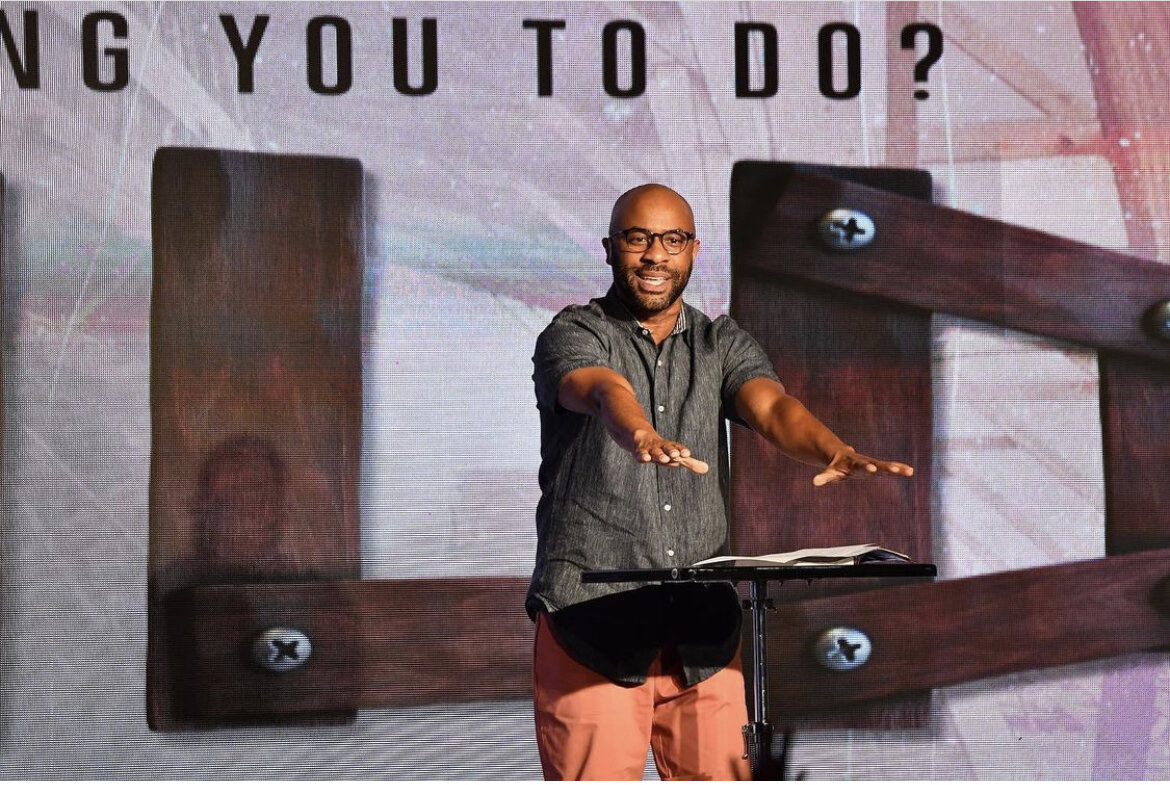
Metro Atlanta Pastor Olu Brown On LGBTQ+ Inclusion In The Church: ‘It’s A Social Justice Issue’
For nearly 15 years, Olu Brown, Lead Pastor of Impact Church, located in what was once an abandoned warehouse in East Point after small beginnings in the auditorium of Brown Middle School, has quickly become one of the fastest-growing United Methodist Churches in the country by “doing church differently.”
A native Texan, LGBTQ+ ally, and divorced father of two, Brown leads a 21st-century congregation that is diverse and inclusive—two buzzwords that often serve as signals to LGBTQ+ Christians that a house of worship is safe and welcoming. But unlike many African-American ministers who embrace Black liberation theology concerning the oppression of Black people—but take a literal approach to the Biblical condemnation of queer people—Brown is explicit about the evolution of his theological position and why his support for the LGBTQ+ community, along with conversations with conservative clergy about LGBTQ+ issues is not only the right thing to do but is also a social justice issue.

Preserving History: Photo Exhibit To Display Early 2000s Atlanta Black LGBTQ Activism
Tucked away in several boxes inside a Midtown Atlanta condo are photographs filled with stories of Black queer Atlanta in the early 2000s. It’s a makeshift time capsule of a vibrant, organized, and politically engaged community from an era that continues to hold significance for those who experienced it, but runs the risk of being forgotten by future generations. Long time Atlanta LGBTQ+ activist and recording artist Anthony Antoine is partnering with CNP to ensure the events and images that helped shape the Black LGBTQ+ equality movement in Atlanta are never erased—specifically, Antoine’s 2001 inaugural Stand Up & Represent March, which saw hundreds of Black LGBTQ+ people and their allies march through historically Black neighborhoods in Southwest Atlanta for three years consecutively.
The March, which initially began at the State Capitol and ended at The King Center—and eventually transitioned to Atlanta’s West End—is a move that Antoine says was intentional.
Lifting The Burden: Georgia HIV Justice Coalition Is Committed to Criminalization Law Reform
Since 2013, the Georgia HIV Justice Coalition, a conglomerate of up to 10 active social justice and HIV-centered organizations, has been at the forefront of reforming Georgia’s draconian HIV criminalization laws. Eric Paulk and Malcolm Reid, newly elected co-chairs of the Georgia HIV Justice Coalition, and proponents of HIV criminalization law reform, say they would like to see the law updated to reflect scientific advancements such as “U=U,” undetectable equals untransmittable, which has not only extended the lifespan of people living with HIV but has reduced the risk of transmission to zero for those individuals on antiretroviral therapy.
If Elected To Atlanta City Council, Keisha Waites Intends To 'Take Care Of The People's Business'
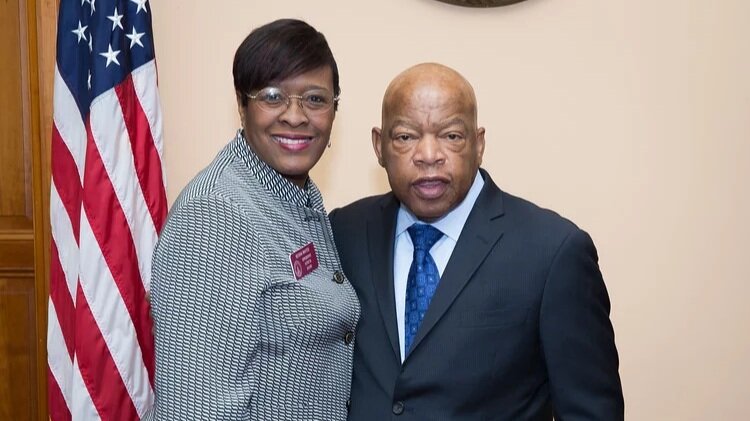
Keisha Waites wants to make one thing clear. “I am not a politician,” she told The Reckoning. “I am a problem solver and a public servant.”
A native of Atlanta and a former state legislator, Waites is vying to replace Andre Dickens, one of nearly a dozen candidates in Atlanta’s mayoral race, on the Atlanta City Council. She is one of five candidates running for the council’s post-3 at-large seat. It is a crowded, and in some respects, an impressive field of candidates that include familiar names like Jacki Labat, as well as Ralph Long, Sherry B. Williams, and Jodi Merriday. But of all the candidates in her race, Waites believes she is the one with the best chance of helping to move the city forward.
‘Smoke, Lilies & Jade:' Queer Harlem Renaissance Short To Make Atlanta Debut At Out On Film
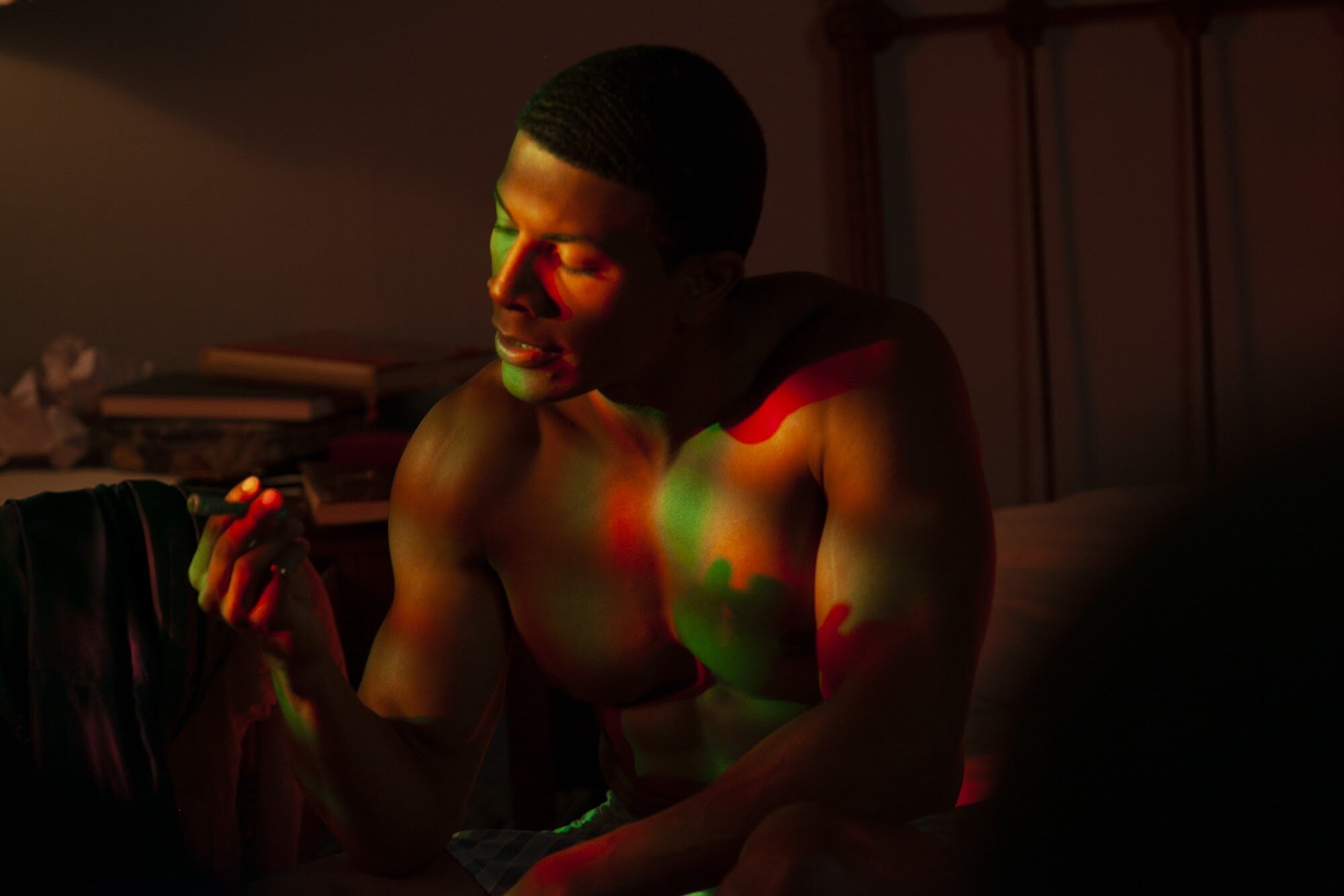
After a successful world premiere at Outfest in Los Angeles, the cast and creative team behind the new short film “Smoke, Lilies, and Jade” are preparing to screen their lush queer Harlem Renaissance drama for Atlanta audiences during the annual Out On Film Festival on September 26, at Landmark Midtown Arts Cinema. Directed and produced by married filmmaking duo Quincy LeNear Gossfield and Deondray Gossfield (The DL Chronicles, FLAMES), and adapted for the screen by writer Robert Philipson from Richard Bruce Nugent's short story by the same name. The film also includes voice narration by Emmy award winner Billy Porter (POSE, Cinderella).

The Revolutionary Romance of Deontez and Jerald: How Faith and ‘U=U,’ Led To I Do
A lot has changed since Deontez Wimbley first walked into the Chilli’s restaurant in the Lindbergh section of Buckhead in April 2016. Today, the restaurant is permanently closed, but nearly six years later, the connection he made with Jerald Nuness, then a server, and now his husband, proved to be worth the risk of being rejected. Like customers who frequently tipped less than the standard 20% or not at all, Nuness says he was accustomed to being hit on at work, and Wimbley, who also worked in the restaurant industry for a period, knew the odds of the conversation moving beyond a two for $20 were slim to none, or so he thought.

The Liberation of Lil Nas X
Lil Nas X is a self-affirming Black gay millennial, a megastar still rising, and an impresario of social media. His releases shatter sales and streaming records. His videos and live performances display unambiguously queer Black sexiness before mainstream audiences.

‘You Go Girl!’ Ain’t Enough: Queer Atlanta Author Encourages Activism Against Racist Fat Phobia
In case you haven’t noticed, fat bodies are having a moment.
It’s apparent in marketing strategies like Victoria’s Secret’s recent 180-degree turn toward size inclusivity; in the abundance of plus-sized TV and book characters reaching beyond stereotypical “fat friend” roles, and every time pop phenom Lizzo proudly struts her extra-large frame across the stage to wild applause.
The new era message is fat positivity, and to the casual observer at least, it appears there’s never been a more affirming time to be a big person.
Da'Shaun L. Harrison knows better. Large, Black, and queer, they exist at a precarious nexus of historically undervalued identities with complex social stigmas that reach far beyond what a few size-inclusive ad campaigns can address.