

Elder Rahkel Henry Talks Faith And Trans Identity: ‘God Was Clear About Who I Would Be’
“You know who I am and you know what I am here for. Turn up for Jesus and turn down for nothing!” Those who follow Elder Rahkel Henry, 44, on social media are familiar with this call to action that serves as the intro to several Facebook videos posted by the Atlantic City, New Jersey native to inspire her followers. During a recent conversation she confessed, “I know I’m real talkative, I can’t help it.” This is true, but what Henry doesn’t mention is that when she speaks, she always has a WORD that compels people of faith or no faith at all to sit up and listen, which as an African-American transgender woman in ministry, is a feat of epic proportions.

Two Black Gay Men Are Sharing Their HIV Journey On Billboards Across Atlanta
High above Goodfellas Pizza at the intersection of Spring Street and North Avenue in Midtown, stands a billboard featuring Jeremy Roberts, 31, accompanied by the words: “I Wouldn’t Be Here Without Grady.” Atlantans will instantly recognize the billboard as an ad for Grady Hospital, a long-standing health care institution that for decades has served Atlanta’s African-American community, including those who are uninsured, underinsured, and or living with HIV. Behind the smile and confidence that Roberts displays for thousands of commuters each day, is a story of a man living and thriving with HIV despite initially having his status weaponized against him.

For Many Black Gay Men, The Freeway To Freedom and Liberation Runs Through Atlanta
Rev. Duncan Teague’s visit to Atlanta in 1984 was supposed to be a short-lived two-week vacation to celebrate his college graduation. Now nearly 40 years later, Teague is among thousands, if not millions of Black gay men who have migrated to Atlanta in search of liberation, freedom, community, and themselves. It’s a common thread that connects those who have taken the bus ride of faith from their relatively small southern or midwestern towns, often with no concrete plan and very little money, but with an overwhelming desire to become fully realized human beings in a city that is often both romanticized and demonized, yet affords Black gay men space to simply be.

Black LGBTQ+ Activists Express Outrage As No Police Are Charged in Murder of Breonna Taylor
In the wake of the grand jury’s decision and public outrage, The Reckoning collected statements from leaders and community activists in Atlanta’s Black LGBTQ community to get a sense of how local thought and movement leaders are grappling with another Black murder at the hands of the state going unpunished.

First-Time Filmmaker Brings Tenderness, Vulnerability of Black Gay Love To the Screen In “Bill & Robert”
New York City based poet, writer, and first time filmmaker Kamaria J. Hodge could have let fear and inexperience stop her from stepping into the director’s chair, but not only would that have been an affront to her gift as an artist, it would have deprived the world of the beautiful gift that is “Bill & Robert,” the short film that serves as Hodge’s directorial debut and is scheduled to make it’s Atlanta premiere during the virtual Out On Film Festival kicking off on September 24.
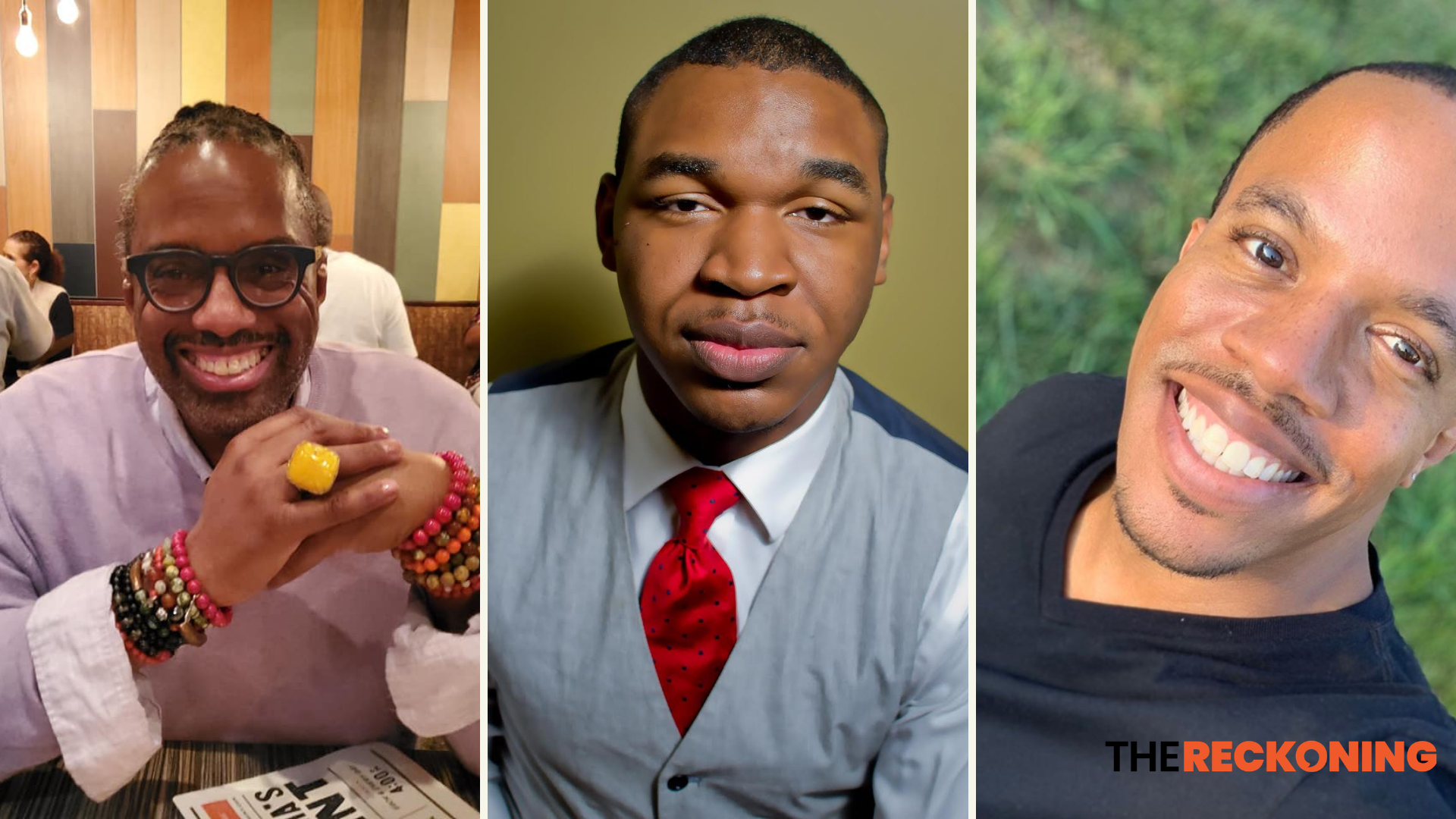
Taking Control Of The Narrative: Three Black Bisexual Men Speak Their Truth
Bisexuality is real. Black Bisexual men exist. Andrew Gillum happens to be one of those men. The Reckoning is providing a platform to three openly bisexual Black men to amplify their truth and to take control of a narrative that has historically been steeped in misinformation and bias, and told by everyone but the men who live it.
Black Gay Director Pulls The Cover Off Homophobia, Family Secrets in ‘Thicker Than Blood’
Anthony L. Williams, writer and director of the 2017 independent feature film “Thicker Than Blood” is placing Black gay characters at the center of his work and challenging audiences to move beyond any stereotypically held beliefs in search of the truth in love that binds us all.
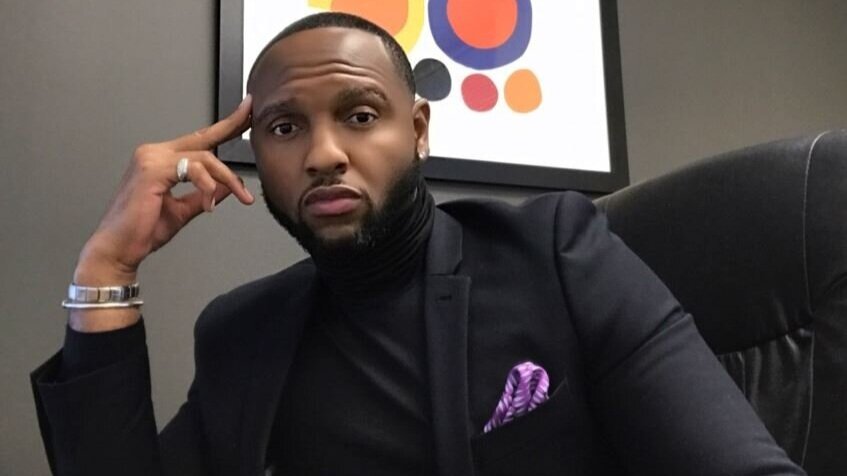
Atlanta Therapist Machel Hunt Is On A Mission To Get Black Gay Men Into Therapy
Black gay relationship counselor and psychosexual therapist Machel Hunt tells The Reckoning that he is “on a mission to have every Black gay man in Atlanta in therapy.”
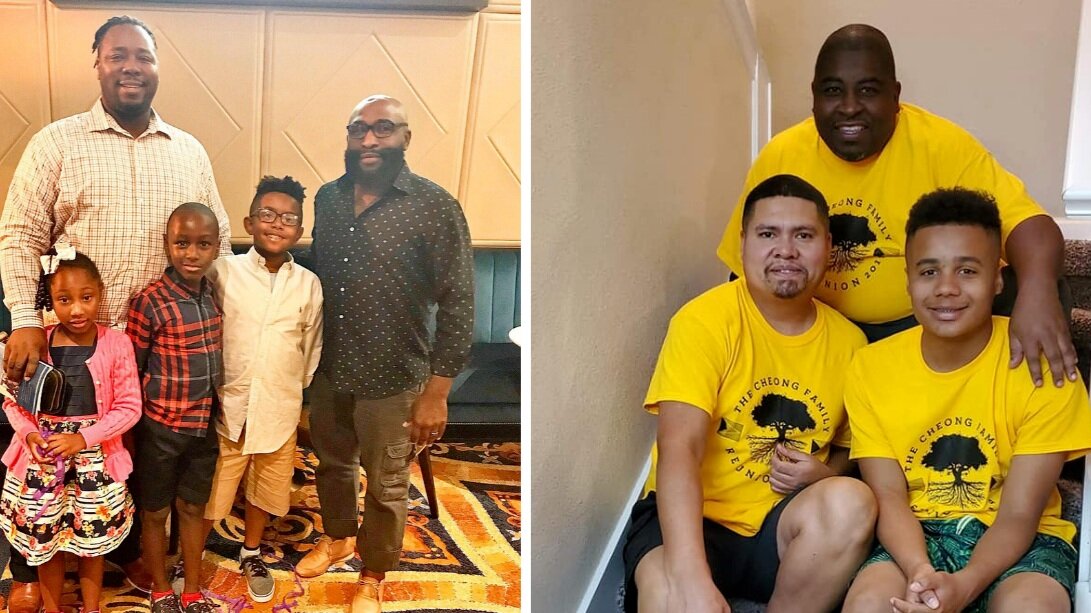
Black Gay Dads Reflect On The Impact Of Jacob Blake Shooting On Their Families
The Reckoning spoke with two sets of Atlanta Black gay dads who are raising Black boys to discuss how Blake’s shooting has impacted the conversations they’re having as a family about police brutality, social unrest, and surviving in America when the color of your skin is perceived as a deadly weapon.

Celebrating 25 Years of James Earl Hardy’s Magnum Opus ‘B-Boy Blues’
We all remember where we were when we heard that song for the first time, or when we saw that music video or read that book that changed our lives. For many Black gay and same gender loving men, coming across a piece of literature that centered our stories honestly and authentically was the equivalent of finding a needle in a haystack, and when we found it, we often had to steal away in the dark of night to not risk outing ourselves. In a fictitious world created by authors who saw our queerness as an asset and not a liability, James Earl Hardy and his magnum opus “B-Boy Blues,” which is celebrating its 25th anniversary this year is one of those authors.
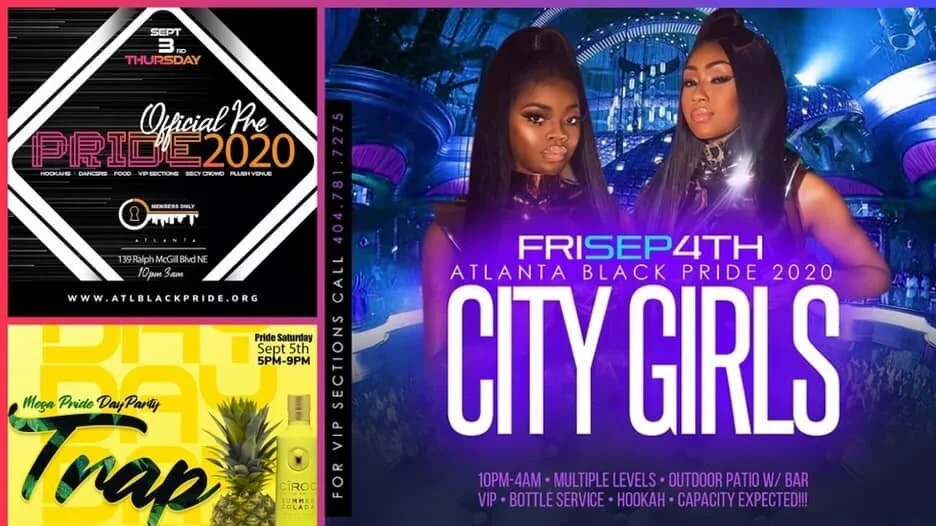
Labor Day Weekend Events Promoted As ‘Atlanta Black Pride’ To Commence As COVID-19 Cases Surge in Georgia
For decades, members of the Black LGBTQ community have collectively converged upon the ‘city too busy to hate’ to experience a sort-of Black queer utopia that some would argue is unique to Atlanta Black Pride—a rite of passage; escapism from the rigid structure of corporate America, or the confines of living in a small conservative town rife with intolerance and religious bigotry. If it were any other year, the need to escape to celebrate with the community would likely be encouraged, but this is 2020. The impact of the deadly coronavirus pandemic has brought life as we once knew it to a screeching halt—well, everything but ‘Atlanta Black Pride.’

The Fragmented Musings of Aging With Age
I have survived being abused as a child. Physically by my father in the form of discipline because that was all he knew and called it love and sexually by a teenage cousin exploring the surge of testosterone while taking advantage of a younger cousin who was sensitive and “ different.” I don’t feel mentally or emotionally burdened by either situation.

Pearls
In my walk from young adulthood to now, I’ve learned a lot about myself. Before landing in Washington, D.C. 24 years ago in 1995, no one told me how challenging that phase of life would be as I came to grips with accepting my sexuality, which was anything but a straight line. I had no roadmap to figure out what was happening or how to navigate any of it. Back then, any literature that was black, gay adjacent that I could get my hands on, I read. It wasn’t until I discovered the works of E. Lynn Harris and James Earl Hardy that some of what I had been carrying around regarding my sexuality started to make any kind of sense. As liberating as that felt, it was also terribly confusing.

Gray Hairs
When I was in my late teens, maybe seventeen or eighteen, I freaked out after spotting a gray hair on my head. My parents teased me mercilessly for days afterward, especially my dad who was the first to tell me that plucking the traitorous string would only bring more in its place. I ignored my dad’s warning and plucked the gray out of my head, becoming obsessively diligent in keeping my facial hair gray free. At the time, I didn’t think I had “earned” it. I wasn’t wise. I wasn’t working to the point of showing any signs of old age. Although, unbeknownst to me, I was stressing, Stressing out about somethings I wasn’t ready to face. And stress could cause grays, but at eighteen? Ridiculous.

I Found My Purpose While Aging With HIV
There is something about the age of 50 that changes you. For some, there is dread and a sense of disappointment with the lack of accomplishment. While others are motivated to begin living their lives with a sense of purpose. For me, it was a little of both.
I reached the age of 50 on September 17, 2007. I was well into my career in IT and 10 years into my relationship with my now-husband, Stewart. I began feeling anxious; material possessions, a beautiful home, a stable relationship, and an active social life were no longer enough. I needed more, I was at the beginning of a journey. A journey to find my purpose. A dream that is just being implemented today.

That Day
Thinking about what I would write when speaking about HIV and aging for me has been a journey of self-reflection. I can't acknowledge all I have been through without genuinely reflecting on “That Day” I was diagnosed. You see, I never thought I would make it to 25 years of age. I truly thought my life was over, and there was nothing left to do but wait for my inevitable death. For three years after my initial diagnosis, I lived to die.

Survivor's Remorse
It was New Year’s Eve, 1995. Essex Hemphill, Easy-E, and Glenn Burke had all died of complications from AIDS in the past few months. A shadow of death was all around the Bay Area. Still, life went on, at least for some of us in San Francisco. A few friends had gathered in an apartment to wrest whatever happiness we could from an end of the year celebration.
We later discovered that 1995 was the peak for AIDS-related deaths in the U.S. It claimed over 41,000 Americans that year.
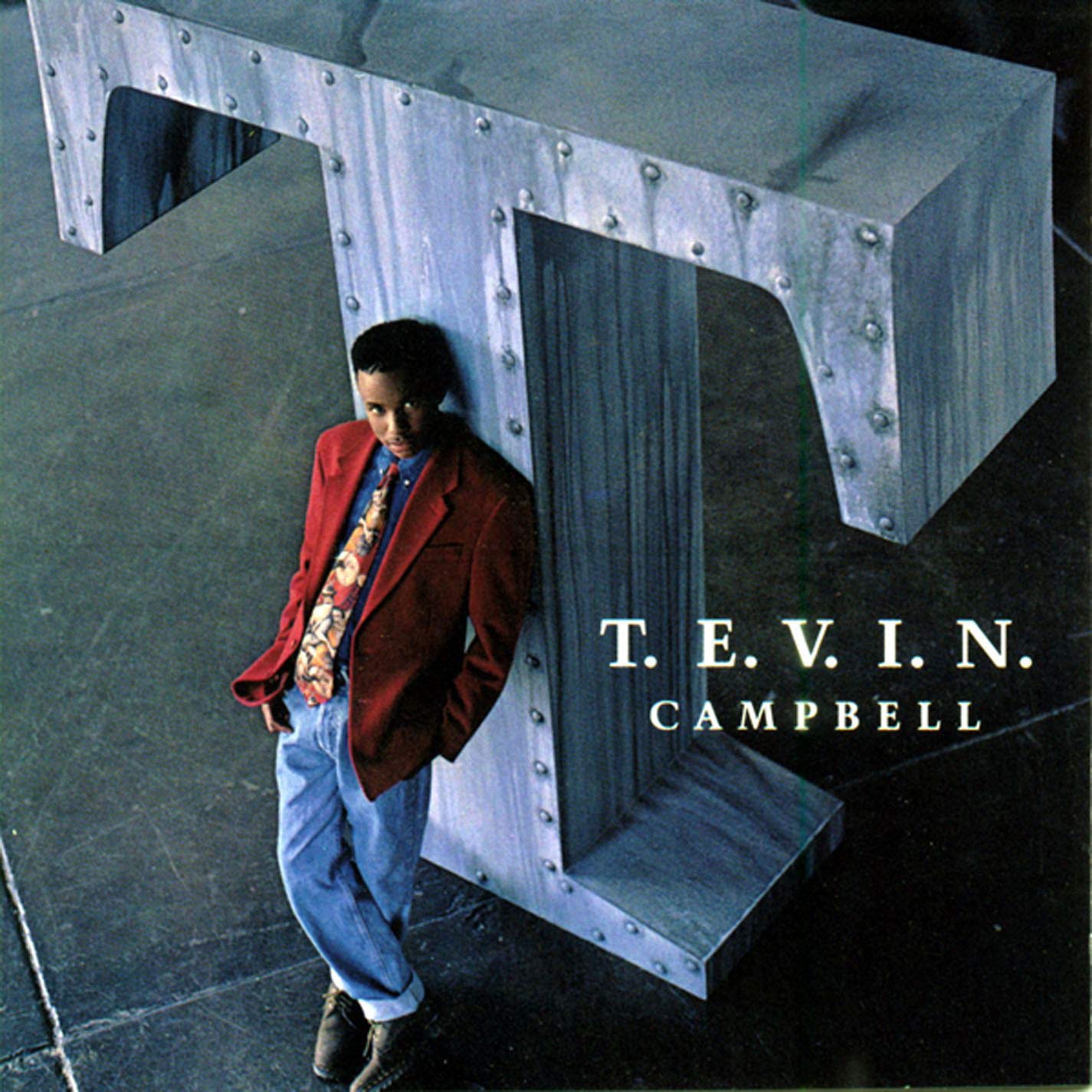
The Curious Case of Tevin Campbell
Tevin Campbell has been in the news again, this time for all the right reasons.

Lori Lightfoot: Meditations on a Hometown “Win” from a Hometown Boy
She’s black. She’s a woman. She’s a lesbian. She has a wife and family. She has the conservative butch natural cut sported by Aunties of a certain age since at least ’72. “But, what does it all mean?

Beyoncé and Jay-Z Acknowledge Their Black Gay Family & Their Respective Struggles
Black LGBTQIA+ relations to their heterosexual counterparts is seldom part of the public narrative about Black LGBTQIA+ life, though their presence and relationship as bell hooks tells us in 1992’s Black Looks: Race and Representation has always been a seamless part of our collective community.