
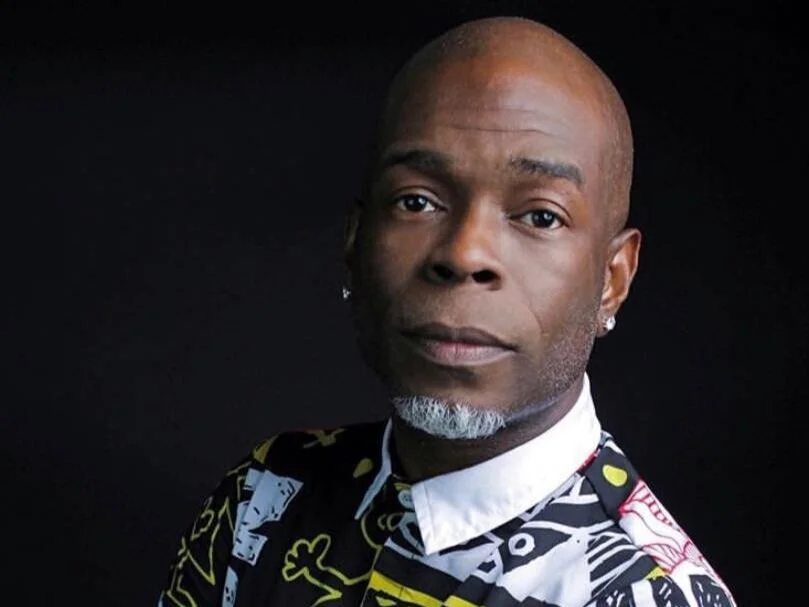
Morris Singletary: How An SGL Church Boy Turned Pain Into Purpose While Receiving Applause From Beyoncé
Picture it. Atlanta. June 23, 2006. A Black church boy sits in a room awaiting the results of a rapid HIV test. The seconds feel like hours and the hours feel like days. The clock strikes 3 p.m., he is now fifteen minutes away from embodying the stereotype of Black gay men living with HIV as an inevitability. His greatest fear is confirmed. He is HIV-positive. He is also given 90 days to live. But for Morris Singletary, 43, Founder and CEO of Pozitive2Positive, there are no tears, only the beginning of an awakening that would lead him to fight for his life and the lives of other Black same gender loving church boys living with HIV.

Two Black Gay Men Are Sharing Their HIV Journey On Billboards Across Atlanta
High above Goodfellas Pizza at the intersection of Spring Street and North Avenue in Midtown, stands a billboard featuring Jeremy Roberts, 31, accompanied by the words: “I Wouldn’t Be Here Without Grady.” Atlantans will instantly recognize the billboard as an ad for Grady Hospital, a long-standing health care institution that for decades has served Atlanta’s African-American community, including those who are uninsured, underinsured, and or living with HIV. Behind the smile and confidence that Roberts displays for thousands of commuters each day, is a story of a man living and thriving with HIV despite initially having his status weaponized against him.

The Fragmented Musings of Aging With Age
I have survived being abused as a child. Physically by my father in the form of discipline because that was all he knew and called it love and sexually by a teenage cousin exploring the surge of testosterone while taking advantage of a younger cousin who was sensitive and “ different.” I don’t feel mentally or emotionally burdened by either situation.

Pearls
In my walk from young adulthood to now, I’ve learned a lot about myself. Before landing in Washington, D.C. 24 years ago in 1995, no one told me how challenging that phase of life would be as I came to grips with accepting my sexuality, which was anything but a straight line. I had no roadmap to figure out what was happening or how to navigate any of it. Back then, any literature that was black, gay adjacent that I could get my hands on, I read. It wasn’t until I discovered the works of E. Lynn Harris and James Earl Hardy that some of what I had been carrying around regarding my sexuality started to make any kind of sense. As liberating as that felt, it was also terribly confusing.

I Found My Purpose While Aging With HIV
There is something about the age of 50 that changes you. For some, there is dread and a sense of disappointment with the lack of accomplishment. While others are motivated to begin living their lives with a sense of purpose. For me, it was a little of both.
I reached the age of 50 on September 17, 2007. I was well into my career in IT and 10 years into my relationship with my now-husband, Stewart. I began feeling anxious; material possessions, a beautiful home, a stable relationship, and an active social life were no longer enough. I needed more, I was at the beginning of a journey. A journey to find my purpose. A dream that is just being implemented today.

That Day
Thinking about what I would write when speaking about HIV and aging for me has been a journey of self-reflection. I can't acknowledge all I have been through without genuinely reflecting on “That Day” I was diagnosed. You see, I never thought I would make it to 25 years of age. I truly thought my life was over, and there was nothing left to do but wait for my inevitable death. For three years after my initial diagnosis, I lived to die.

Survivor's Remorse
It was New Year’s Eve, 1995. Essex Hemphill, Easy-E, and Glenn Burke had all died of complications from AIDS in the past few months. A shadow of death was all around the Bay Area. Still, life went on, at least for some of us in San Francisco. A few friends had gathered in an apartment to wrest whatever happiness we could from an end of the year celebration.
We later discovered that 1995 was the peak for AIDS-related deaths in the U.S. It claimed over 41,000 Americans that year.