Progress or Nawl? Television’s Black Queer Renaissance Faces Bumps In The Road
Screen capture of characters Big Teak (John Stewart) and Lil Murda (J. Alphonse Nicholson) from P-Valley
With a bearded, high-heeled Saucy Santana featured in mainstream music videos and a pony-tailed Billy Porter hosting ballroom legends on the BET Awards, it’s become easy to think that the Black queer man has claimed his seat at the mainstream table. It took just one cable show and a blink-and-you’d-miss-it sex scene to prove otherwise.
The show was P-Valley, the scene, a quick segment on a recent episode of the Starz hit that showed two masculine-presenting men engaged in a steamy romp.
It was tame as gay sex scenes go. But the backlash was swift, with straight viewers promptly taking to social media to express shock and even suggest the show needed a “gay sex warning”.
The dust has largely settled surrounding the late June episode. But the sharp reaction continues to drive conversations among LGBTQ+ TV and film insiders about the true measure of Black queer mainstream acceptance.
“I will truly understand us as a bit more accepted when we are able to go on television and be shown as families doing things that everybody else does and not have people going, oh my God, they’re pushing a gay agenda down my throat,” says Sampson McCormick, a Black, gay comedian, actor, and film director with two decades in the business. “It’s not an agenda. This is my life.”
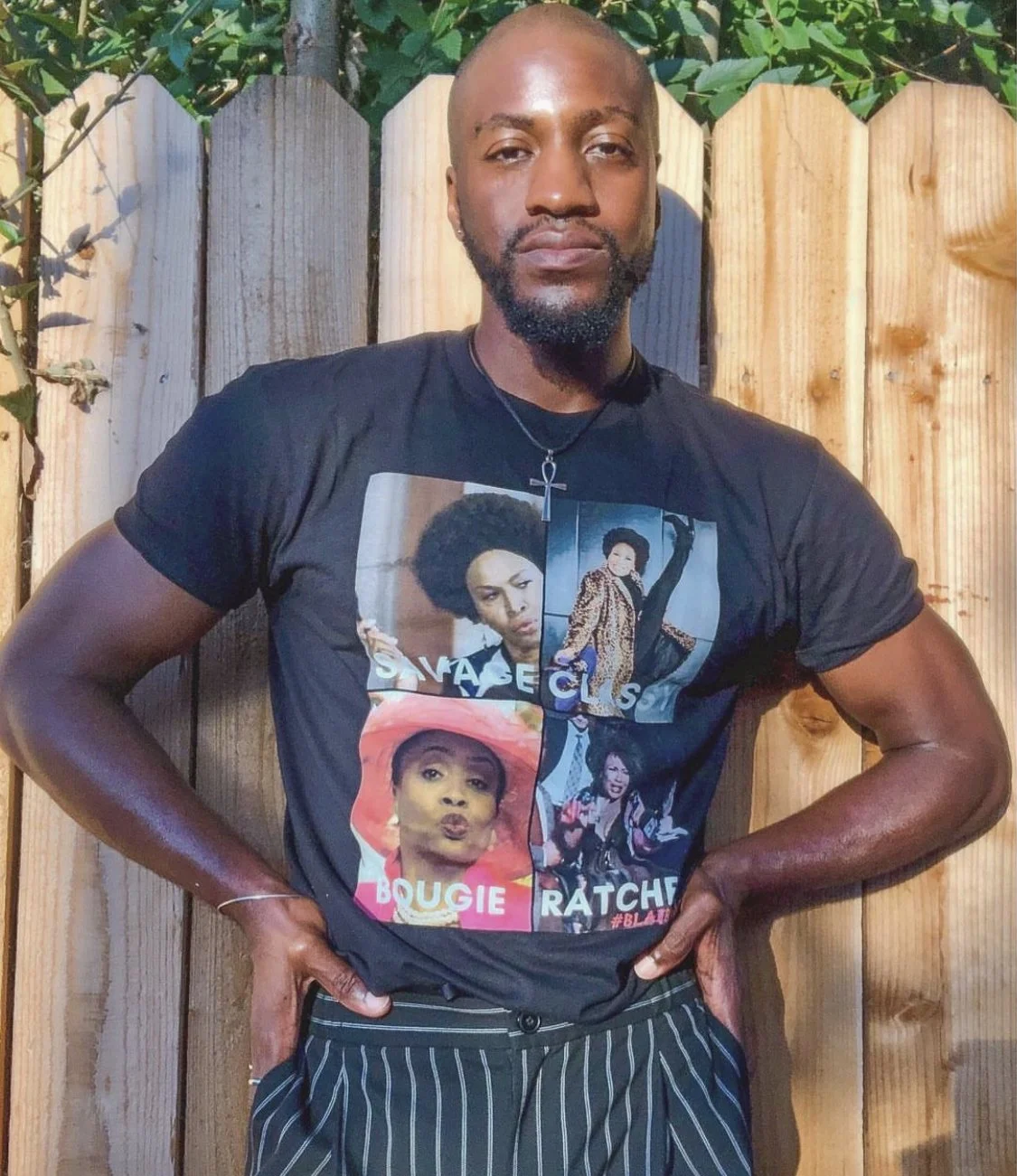
“I will truly understand us as a bit more accepted when we are able to go on television and be shown as families doing things that everybody else does and not have people going, oh my God, they’re pushing a gay agenda down my throat.”
- Sampson McCormick
Sampson echoes the frustration of a myriad of LGBTQ+ TV and film creators, including P-Valley co-producer Patrik-Ian Polk, who took to Twitter recently to tell trolls to “Go watch something else. Cuz the gay ain’t goin’ nowhere.” And Polk delivered. By late July, Twitter was again ablaze after the show’s effeminate main character topped his on-again, off-again masculine boyfriend.
Polk joins a wave of Black TV and film creatives, helming a renaissance of Black queer portrayals gaining never before seen commercial success. Yet insiders warn that entrée into the mainstream comes at a cost: It’s straight network producers—not the comparatively small LGBTQ+ community—that are financing these ventures, with investments that may last only as long as their tolerance.
The P-Valley dustup, insiders say, shed light on how delicate that tolerance truly is.
“It’s always art versus commerce in Hollywood,” says Deondray Gossfield, who created the popular series “The DL Chronicles,” with husband Quincy LeNear Gossfield. “There is still a sort of tightrope where you have to sort of mitigate and balance how much of these marginalized communities that you put on the screen.”
Screen capture of George Jefferson (Sherman Hemsley) with Edie Stokes (Veronica Redd), a transgender woman character portrayed by a cisgender woman on The Jeffersons
Slow and Steady Progress?
Even as mainstream TV has progressed steadily toward realistic LGBTQ+ portrayals, Black mainstream TV has largely remained stagnant. The gradual rise of shows helmed by Black queer writers has indeed given birth to more inclusion, but insiders say it has yet to truly chip away at Black viewers’ discomfort with gay men beyond flamboyant caricatures.
“These folks who are complaining don’t want gay sex in the spaces that are supposed to be ‘safe’,” says Alfred Martin, associate professor of media studies at the University of Iowa and author of “The Generic Closet.”
“Starz or ABC or Fox are supposed to be spaces where you aren’t supposed to get gayness you didn’t ask for,” he says. “You’re supposed to get the fun queer.”
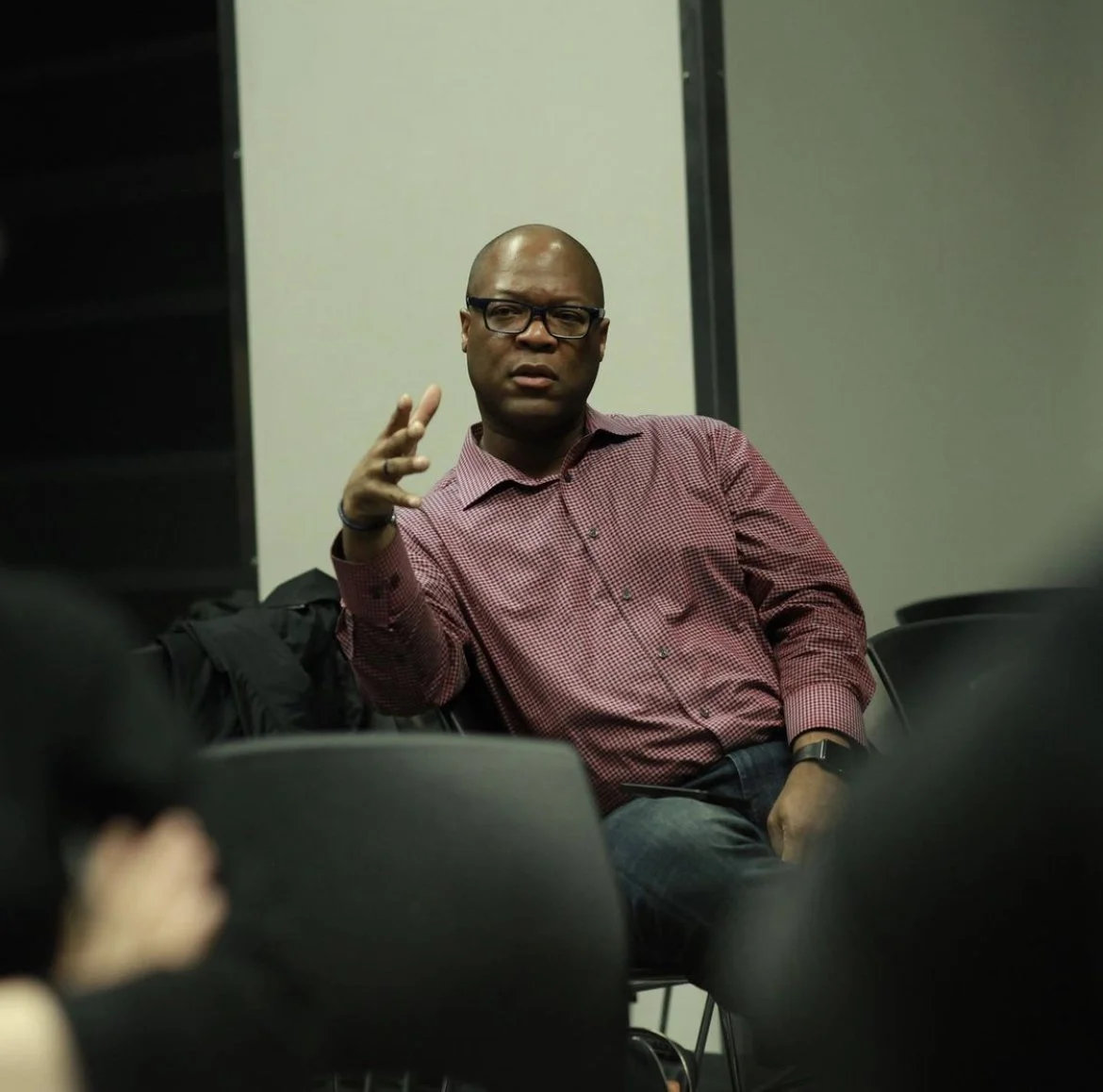
“These folks who are complaining don’t want gay sex in the spaces that are supposed to be ‘safe.’ Starz or ABC or Fox are supposed to be spaces where you aren’t supposed to get gayness you didn’t ask for.”
- Alfred Martin
Martin has studied portrayals of race and sexuality on TV, going back to some of the earliest TV appearances of Black queer men in the 1970s. Back then, Martin says TV networks were using sitcoms like “Maude” and “The Jeffersons” to address hot-button social issues like race, gender, and sexuality.
“Those shows were actually trying to show, 'Hey look, these gay people are okay,” he says.
The rise of the AIDS epidemic threw an ice bucket on that progress, and by the 1980s, Martin says queer people of color portrayals were largely limited to HIV victims and criminals.
According to Martin, the 1990s brought in a revival of queer characters, but not always for the best: While mainstream TV gave us a heroically out “Ellen,” Black audiences got Jamie Foxx in drag and a pair of finger-snapping, hypersexual gay movie critics.
“It’s always art versus commerce in Hollywood. There is still a sort of tightrope where you have to sort of mitigate and balance how much of these marginalized communities that you put on the screen.”
“The watershed moment in the ‘90s ends up being “In Living Color," Martin says, referring to the Black-produced Fox sketch comedy that aired for four years. “[We got] Blaine and Antoine who sort of return us to this link between Black queer men and femininity.”
The emergence of Black-produced, critically acclaimed juggernauts like “How to Get Away with Murder”—the result, Martin says, of networks targeting well-heeled Black women - created spaces for fresher, more realistic Black queer portrayals.
But Martin says that expansion has also laid bare an uncomfortable truth: Straight audiences are fine with queer male characters as long as their sexuality is never discussed or portrayed.
It adds up to inclusion, but Martin says it’s far from true acceptance.
“We are still having the same kinds of struggles that we’ve always been having,” Martin says. “The problem is that we conflate visibility with actual progress.”
Quincy LeNear and Deondray Gossfield (Image courtesy of subject)
Getting to the Root
The scene that set social media on fire was embarrassingly mild. A dam of bristling sexual tension between fictional P-Valley rapper Lil Murda and his fresh-out-the-pen homeboy Big Teak finally breaks into a passionate escapade. A bottle of lube and the men’s backs are shown, followed by the requisite groans and shadowy scenes of sheet grabbing, set to suggestive music. It was nothing much for queer audiences, but shocking enough for popular comedian Lil Duval to proclaim that “They need a super gay advisory on movies like they got for everything else. Cuz that’s a lot to see if u not use to it.”
The comedian summed up the sentiment of many straight viewers, who argued that the scene was far too graphic. But LGBTQ+ TV and film insiders say the real issue is Black America’s lingering double standards when it comes to Black gays in general and Black gay men in particular. McCormick pointed to the abundance of sex scenes on cable and even network TV.
“So many other facets of life and sexuality are explored with everybody else – we see all kinds of stuff with straight people,” says McCormick, who says audiences were just bothered by seeing two masculine-appearing men being intimate.
“What makes it hit home a little harder is they’re sitting there with their boyfriends or their husbands or their sons or whatever and they [the actors playing queer roles] look exactly like their boyfriends or their sons.”
“You don’t just kick the door open. You have to sort of prime the audience for how you walk through the world. I have confidence that one day we will truly be authentically represented—blazingly so.”
McCormick touches on a well-established phobia surrounding Black queer men who aren’t so-called “clockable”—men who lack the plunging necklines of a Saucy Santana or the sky-high heels of a RuPaul that make them immediately identifiable as queer. It’s that phobia that some say fueled the down-low panic of the late 2000s and continues to pose one of the biggest hurdles for queer Black TV creators. For all its groundbreaking portrayals, Deondray Gossfield says even P-Valley isn’t entirely immune: He pointed to the near-immediate death of the Big Teak character, and Lil Murda’s return to a more effeminate man.
“We have to have this masculine guy with this very effeminate man… the audiences at large are more comfortable with those because they can kind of plug themselves into that dynamic more easily,” he says. “But that does not represent us fully.”
The Gossfields, who recently worked with lesbian producer Lena Waithe on an episode of her Showtime drama series “The Chi,” says the best way to change things is for LGBTQ+ creators to continue making the characters they want to see.
“The best weapon we can wield against these tropes is our pen,” he says. “It’s an uphill battle.”
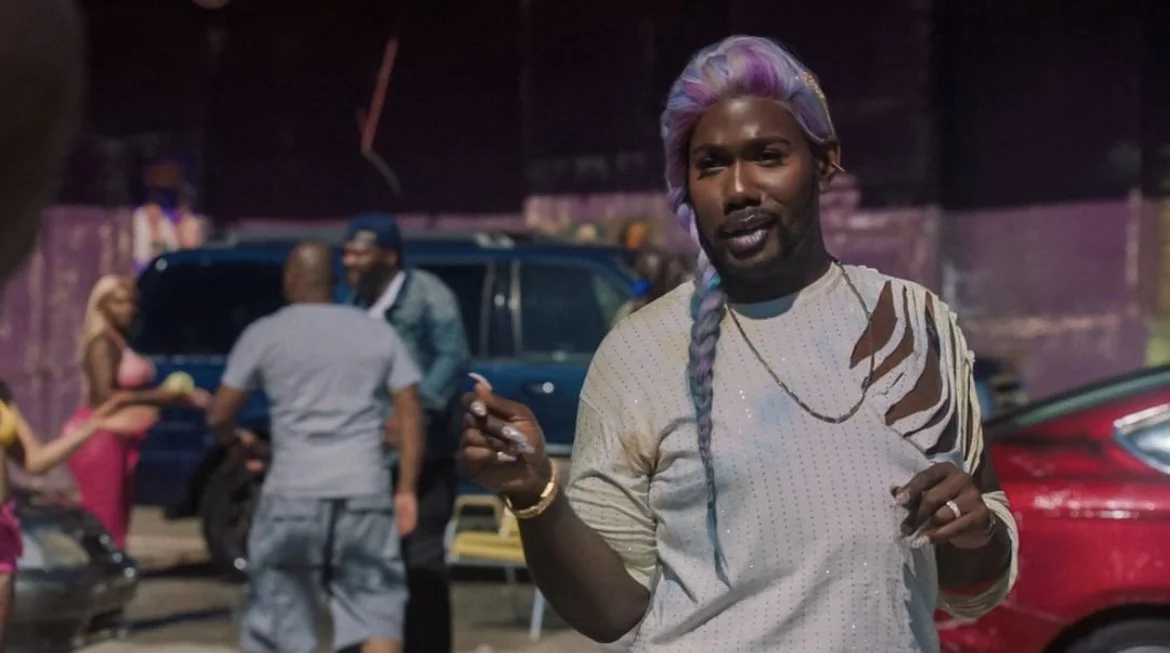
A still image of Uncle Clifford (Nicco Annan) from P-Valley
But all is not doom and gloom, says Martin, who believes an influx of queer creatives in positions of power is changing the demographics in many networks.
“What we’re seeing in some ways is a changing of the show-running guard,” he says. “These folks are sort of getting in the system and are partly able to create writer’s rooms that look in particular ways.”
But Deondray Gossfield warns audiences not to expect a dramatic change overnight. LGBTQ+ creators are still stuck writing storylines that are queer enough to be authentic to LGBTQ+ audiences, but don’t alienate the heterosexual audiences that drive ratings and networks' cash flow, he says.
“You don’t just kick the door open. You have to sort of prime the audience for how you walk through the world,” he says. “I have confidence that one day we will truly be authentically represented—blazingly so.”