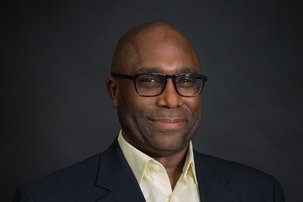
Culture Change Begins in the Locker Room: The Legacy of Jason Collins
In the days since his death from a brain tumor, accolades for Jason Collins, the first openly gay NBA player, rocketed around the sports world. National Basketball Association officials praised his courage, former teammates celebrated his professionalism and sportswriters called him a trailblazer.
But there is an uncomfortable truth beneath the accolades: a trailblazer forges a path for others to follow, presumably to a better destination. In the 13 years since Collins publicly declared his sexuality, not a single active NBA player has done the same.
That failure belongs not to Collins, but to the league itself.
“For all the league’s progressive politics, gay NBA players are still stuck in what one sportswriter dubbed “the last closet” — the team sports locker room.”
To be clear, Collins deserves every tribute. The Stanford graduate and former first-round draft pick carved out a 13-year career in a league where the average player lasts fewer than five seasons. For a potential star-turned-role player, surviving that long in the NBA’s ruthless, who’s-next ecosystem is an accomplishment in itself.
Yet his coming out announcement in 2013, near the end of his career, was framed as something larger than a dependable veteran bravely speaking his truth with nothing to lose. He was presented as a potentially transformational figure — basketball’s version of Jackie Robinson — whose honesty and visibility would open the door for others.
Collins, who switched his jersey number to 98, the year of Matthew Shepard’s murder, seemed to understand this.
“If I had my way,” he wrote in his Sports Illustrated coming-out essay, “someone else would have already done this. Nobody has, which is why I'm raising my hand.”
The candid essay instantly elevated Collins’ profile, and the NBA publicly embraced the symbolism. But it never fully confronted what was necessary for others to follow Collins’ lead.
To be sure, the league celebrates Pride Nights and features LGBTQ-themed promotions across most (but not all) of its franchises. Players wear custom warm-up shirts with pro-Pride slogans. Teams post rainbow graphics on social media. The NBA aggressively fines players for public anti-gay slurs uttered on the court or in an Instagram reel.
The Atlanta Hawks’ Jason Collins #34 throws down a dunk. (© Albert Pena/Cal Sport Media/ZUMAPRESS.com/2011)
But PR campaigns and crackdowns on hate speech aren’t the same things as systemic, cultural change.
Consider: since Collins entered the league in 2001, some 1,600 individual players have cycled through 30 NBA rosters. That he was the only gay man among them is statistically absurd. That no one else felt safe enough to come out publicly is a problem. For all the league’s progressive politics, gay NBA players are still stuck in what one sportswriter dubbed “the last closet” — the team sports locker room.
Anyone who has spent time in that world understands the hyper-masculine culture in which Collins existed for his professional career. Locker rooms can be emotionally and physically intimate spaces wrapped inside rigid expectations about the relationship between masculinity and high performance, often with millions of dollars at stake. Violating those norms, or even appearing to do so, carries consequences that players rarely discuss publicly.
That tension has surfaced repeatedly over the years. Rumors about his sexuality purportedly ended Dwight Howard’s Hall of Fame career. Marquee players Kobe Bryant, Kevin Durant, and Allen Iverson, among others, have been criticized or fined for homophobic language.
Then there’s Jaden Ivey, a promising young player who was ushered out of the league just last month after openly making homophobic remarks in interviews and on social media. At 24, Ivey belonged to the NBA’s supposedly more socially progressive Zoomer generation. Yet his loud condemnation of gay rights and his swift exit suggested that the locker room culture Collins confronted when he put on an NBA uniform more than a decade ago remains stubbornly intact — and behind closed doors. No rainbow-flag warmups or Pride Month slogans are going to change that.
Moreover, with marginal players like Collins, who lack star power, risking authenticity is a losing wager.
“He changed the public image of what an NBA player could be. What he did not change was the deeper culture of professional basketball itself. No one person could.”
An established superstar like LeBron James, with championship rings and sneakers named after him, would probably do just fine if he came out. A young role player fighting for a team’s final roster spot likely would not. In a league that takes in billions of dollars in worldwide revenue per year — and where careers can disappear overnight — silence equals survival.
That is why Collins’ legacy feels both historic and painfully incomplete. He changed the public image of what an NBA player could be. What he did not change was the deeper culture of professional basketball itself. No one person could.
Asked about Collins’ death, former NBA star Charles Barkley did not equivocate. Collins, he declared, probably wasn’t — isn’t — the NBA’s only gay player, past or present; he was the only one with the guts to come out.
“Anybody who thinks we ain’t got a bunch of gay players in all sports, they’re just stupid,” he said. “If another guy [came out], it would still be a big deal, because we live in a homophobic society and that’s unfortunate.”