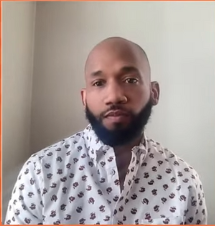
A Revolutionary & Inspiring Researcher: The Louis Graham Virtual Roundtable
Academia often thrives on numbers and longevity—publication counts, citation metrics, and impact factors dictate success. However, when we reduce scholarship to citations alone, we erase the people behind the work, the researchers pushing boundaries, and, most importantly, the communities their work impacts.
Yet, some scholars refuse to sacrifice humanity for metrics—Dr. Louis F. Graham, who had a massive impact, was one of them. A rigorous researcher and a compassionate advocate, he embodied the kind of scholarship that prioritizes impact and integrity. Though he passed away in December 2019, his legacy endures. The Counter Narrative Project (CNP) honored his contributions by establishing a research award in his name. During the Louis Graham Virtual Roundtable, Dr. Lance McCready (Dr. Graham's former mentor), Justin Smith, and Charles Stephens (CNP Founder) sat down to highlight Dr. Graham and his work.
Who was Louis Graham?
As discussed in the video, Louis was an alum of Carleton College, an elite liberal arts institution in Minnesota. Remembered for his tenacity, boldness, and openness, Louis blazed his trail and ignited his passion for public health after studying biology as an undergraduate. Like many, his love for health extended beyond medicine; a study abroad trip to South Africa sparked an epiphany that shaped his approach to public health research and advocacy. Louis went on to earn an MPH from Morehouse School of Medicine (MSM) and a DrPH from the University of North Carolina at Greensboro.
After securing his doctorate, Dr. Graham never lost sight of the communities he served, especially Black queer men. Their needs shaped every stage of his work, from research design to dissemination. Collaboration wasn’t just a method for him; it was a commitment. For example, he collaborated with the Detroit Community-Academic Urban Research Center and served as a Public Engagement Fellow at UMass Amherst. Dr. Graham passed away while he was an Assistant Professor at UMass-Amherst, where he taught various courses in the public health department.
“There is always a cost when you’re early:” Honoring His Legacy
Dr. Graham’s work was radical, revolutionary, and essential. He didn’t just break glass ceilings; he handed others the hammer and built the ladder to help them do the same. Everyone in the video remembered Louis in their own way, honoring him through different stories and experiences.
Representation in Higher Education
Dr. McCready, who first met Louis at Carleton, reflects on his nuanced journey and the significance of his identity as a Black gay man in academia. Recent data indicates that 6% of professors are Black, with 2% being Black men. There is a lack of data specifically on Black queer men. Louis had to overcome the steep intersectional hills of racism, homophobia, and classism to become a professor. He prevailed nonetheless.
Louis broke barriers on multiple fronts. He navigated the entrenched racism in academia, research, and science. A system never designed for scholars like him. Initially, he struggled as a biology major, not because of intelligence but because the material felt disconnected, and the subtle racism he encountered made it even more isolating. He wasn’t alone. Even today, medical textbooks are only just beginning to include images of Black skin.
Also, Louis did not come from wealth, positioning him as drastically different from his peers. The New York Times reported that the latest data shows Carleton College has a median family income of $172,400, and 68% come from the top 20%. This is far beyond the national median of $80,000.
This representation was vital, as it shaped his research and established Louis’s “why.” Justin Smith, who is now a DrPH student at Harvard University, remembers Louis as “ a vanguard of CRT and community-engaged work.” He was an early adopter of innovative approaches to research.
Research Bravery: Who & How
Even though the academic system was not designed for Louis, he certainly cracked the code. His Google Scholar page alone boasts more than 1,000 citations, including several studies with one hundred citations or more. Most researchers would chase metrics like these.
His longevity and sustained research record highlight Dr. Graham’s early ability to connect the dots. At a time of pathology, Dr. Graham centered purpose. Every panelist emphasized his dedication to under-resourced communities and bravery in tackling controversial topics early on. His work did not just study Black queer people; it challenged several aspects of research.
His most cited work (2017) is one of the nation’s most extensive studies of transgender individuals. Another study was groundbreaking as it documented how Black transwomen navigated school, church, and the criminal justice system. He was one of the few researchers to analyze psychosocial factors in Black queer men. He started this back in 2009. He led a 2011 study outlining how to use Critical Race Theory in public health research. His work was revolutionary and helped lay the foundation for the study of these populations.
More than the publications, Dr. Graham prioritized centering and uplifting the community. It wasn’t just his number of articles, but who he studied and how he approached the issue. He refused to chase citations at the expense of those he served, consistently seeking and integrating the voices of those most impacted. He repeatedly pushed back against the adaptation of existing models for Black queer populations, refusing to accept frameworks that didn’t fit. Instead, he championed ground-up interventions, emerging as an early innovator in community-centered research and programming. He always wanted to “make sure that something in our community is built for us.”
Louis’s approach to equitable research wasn’t just about producing his own work but about raising the standard for everyone. Described as a commitment to “care and attention,” this ethos extended even to his critiques of others. The panelists recalled a moment when he was asked to review a study on Black queer men. Unimpressed with the findings, he didn’t reject the work outright. He engaged with it. With a balance of empathy and rigor, he offered clear, actionable feedback, including methodological changes (e.g., structural equation modeling) to strengthen its impact. For Louis, it was never just about making his research exemplary; he wanted all scholarship on Black queer men to thrive.
When reflecting on Dr. Graham’s legacy, Charles Stephens expressed, “There is always a cost when you’re early,” and another added, “With the passing of Louis, there was a death of his possibility.” Dr. Graham lit the flame, and it is now up to us to pass the torch.
I encourage people to cite his work and leverage his research to keep his commitments and lessons. People may perish, but their impact and lessons do not. When asked about closing thoughts, Justin Smith, who studies similar issues, concluded, “I know he is walking with me on this journey that I am on. We all need to know his name.”
Dr. Louis Graham Obituary
From Dr. Graham’s memorial service. Service held on January 25, 2020 at the Progressive Community Baptist Church, Springfield, Massachusetts.
Dr. Louis Graham
Louis Graham, DrPH, an assistant professor in the Department of Health Promotion and Policy at UMass Amherst from 2013-2018, passed away suddenly on December 29, 2019. Dr. Graham received his BA from Carleton College, his MPH from Morehouse School of Medicine, and his DrPH from the University of North Carolina-Greensboro. Dr. Graham was an intellectual, a deep and innovative thinker, and a cherished colleague. His research addressed the health effects of marginality, including racism, homophobia and sexual minority discrimination. He was the Principal Investigator of a large grant funded by the National Institute of Minority Health & Health Disparities, investigating chronic disease prevention with the Men of Color Health Awareness (MOCHA) program in Springfield, MA. This community-based participatory research project focused on stress and resilience among low-income African-American men. His legacy will live on in the Stories Matter curriculum he developed with MOCHA and that is touching the lives of so many black men. Dr. Graham was also a central figure in establishing the UMass Amherst Center for Community Health Equity Research, whose intersectional approach reflects his commitment to understanding the complex nature of oppression and the need to address multiple forms of inequality at once. His insights and provocative contributions pushed his colleagues and friends to think more deeply about their lives, work and actions. His scholarship was nationally recognized by the Harold Dean Philpot Leadership Award for Excellence in National AIDS Education and Services for Minorities (2011), which he received while he was a W.K. Kellogg Health Scholars Program Postdoctoral Fellow (2010-2012). Through his successful community partnerships and mentorship, Dr. Graham’s work has made a measurable difference in the lives and futures of many. His loss is a tremendous blow to the fields of community health education, community-based participatory research, and to research on structurally-rooted health inequity.