

Transgender woman sues AT&T for $3M after being fired, alleges discrimination
Lawsuit claims ‘star’ employee was shunned after unveiling true self
This excerpt is posted with permission via the AJC.
A Cumming resident who spent almost two decades as a senior project leader for AT&T has sued the telecommunications giant, demanding at least $3 million in compensation for alleged gender-based discrimination.
Robyn Casias was regarded as a star AT&T employee for the 16 years she presented as Robert Lott, a married man with three children, the lawsuit says. She said that drastically changed in 2017 when she revealed her transgender status to colleagues during a weeklong meeting in Texas, where AT&T is headquartered.
“Though Robert Lott was a star who led the most important projects, Robyn Casias was an unwanted and unwelcomed outcast who was refused substantive work for three years and then terminated,” the Dec. 22 lawsuit states.
AT&T wouldn’t comment on the complaint, but provided a statement to The Atlanta Journal-Constitution in response to questions about the case.
“We do not discriminate, nor do we tolerate discrimination of any kind, including based on (an) individual’s gender, gender identity or sexual orientation,” the company said.
Casias said she started working for AT&T in December 2001 as a senior member of its technical staff in Georgia, and was promoted in 2006 and again in 2012. She said her work was worth millions of dollars to the company and was recognized in May 2017 with a service excellence award.
By then Casias had “fully socially transitioned” as transgender among her family, friends and the Cumming community, but was afraid to do so at work for fear of retaliation, the lawsuit states.
Casias said her award gave her the confidence she needed about her value to the company in order to reveal her transgender status to colleagues.
During the first and second days of the Texas meeting in June 2017, Casias presented as a man and referred to herself as Robert, per the lawsuit. On the third day, she “courageously decided to unveil her true self.”
“That morning, (Casias) put on her dress, makeup, and nail polish, and left her hotel room experiencing a whirlwind of emotions – fear, irreversible decisions, the possibility of turning back, relief, regret, joy, newfound freedom, apprehension about discrimination, and a myriad of other intense feelings,” the complaint states.
Casias said her revelation was met with disbelief and anger from colleagues. The face of a male coworker at the meeting “turned beet red” before he aggressively demanded to know what she was doing, she alleged.
“The long and successful career she had enjoyed at AT&T while presenting as male came to a screeching, unlawful halt thereafter,” the lawsuit says. “After her workplace transition, (Casias) was taken off many of the previous projects she had been assigned prior to her transition.”
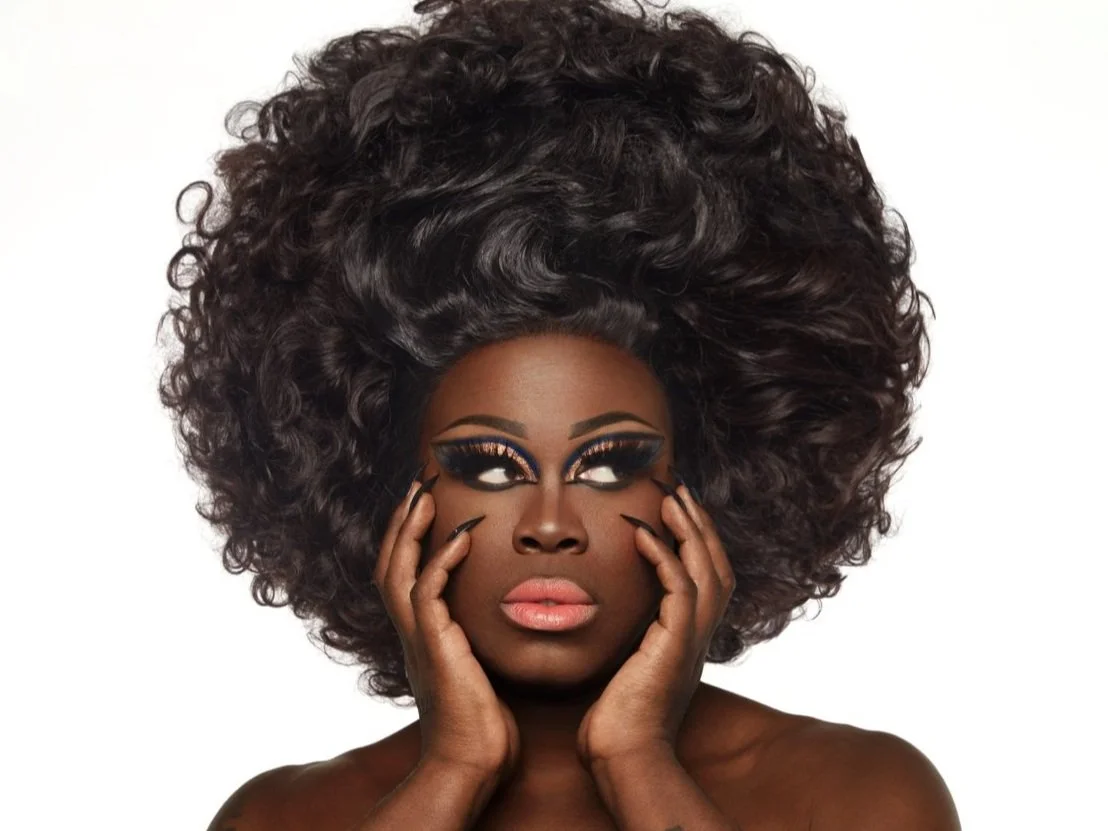
Georgia native Bob the Drag Queen knew the spotlight was made for her
The drag superstar will perform at Atlanta Symphony Hall on Saturday.
This excerpt is posted with permission via the AJC.
Bob the Drag Queen wears many hats. She recently launched a clothing line, owns a cosmetic brand and is currently touring with Madonna. Earlier this year, she dropped an EP “Gay Barz.” The performer, podcaster and comedian admits she has a lot on her plate. But she wouldn’t trade it for anything.
“It’s fun, though,” she said via Zoom. “It’s easier to maintain than it seems.”
This week, Bob the Drag Queen will perform a stand-up comedy set at Atlanta Symphony Hall as this year’s Party with Impact comic. For Bob, the show is a chance to return to her roots, literally and figuratively: comedy is her first love and she always enjoys visiting her hometown. The Columbus native credits her time at Morrow High School for fueling that knack for performing arts.
Bob was crowned the season eight winner of “RuPaul’s Drag Race” in 2016. Since then, the drag superstar has hosted television shows (including the Peabody Award-winning “We’re Here”), performed several comedy specials and continues to have the unabashed confidence that fans fell in love with. She’s looking forward to sharing that with the Atlanta audience during the show.
Although Bob has lived in Los Angeles for three years, she can see herself eventually moving back to the South.
“My family still lives here — in Henry County,” the 37-year-old said. “I just love having a chance to go back to Atlanta, seeing friends from high school, seeing friends from college, but also, you know, I was like an adolescent in Atlanta. I moved to Columbus by the time I was an adult when I was 18, so I never really had much adult life in Atlanta. A part of me always feels a little bit like a kid again when I’m back in Atlanta.”
Bob describes herself as a “stand up comedian through and through” who has found joy in making people laugh for nearly 15 years.
“These are just my thoughts being spewed out to you all in a way that I find humorous...,” she says. “I usually think of a premise that I find a little bit interesting and then I find a way to make it funny. For example, I talk about, misogyny in the gay community. I was thinking about how a lot of these gay guys think they’re above misogyny or above being shady to people because they’re a marginalized group themselves, so I just go into that and find the humor in it.”
Bringing joy to others during a year where anti-drag legislation seemed ubiquitous isn’t an easy feat. A law in nearby Tennessee, which placed drag performers in the same category as strippers and prohibited public performances outside of an adult club, was found unconstitutional in June.

The Dancer: The beautiful rise and tragic fall of Gerard Alexander
The drugstore stood dark, its parking lot empty, as the two homeless men approached.
For them, it was a perfect time to pick up a few items. It didn’t matter that the store was closed. They were there to dumpster dive — to rummage through what other people consider garbage to try to find something salvageable.
Gerard loved to dance from an early age and found a mentor to shape his talent during his chaotic youth. Later Gerard was prominently featured in the 1999 book "Vital Grace: The Black Male Dancer." (Photographer Joanne Savio, choreographer Duane Cyrus)
This excerpt is posted with permission via the AJC.
The drugstore stood dark, its parking lot empty, as the two homeless men approached.
For them, it was a perfect time to pick up a few items. It didn’t matter that the store was closed. They were there to dumpster dive — to rummage through what other people consider garbage to try to find something salvageable.
Trey Nelson’s focus was on that task. Then he heard singing.
He looked up.
The lean older man who had joined him for the late-night foray along Atlanta’s North Druid Hills Road wasn’t just singing. He was dancing. And not just regular-person dancing. This was something else.
His dumpster diving partner was performing ballet pirouettes and graceful leaps in the parking lot.
“It was like I was watching a professional dancer on stage. That’s how good it was,” said Nelson, who remembered years of watching his sisters take lessons at the Atlanta Ballet.
He was amazed when the man — perhaps in his 50s, about 20 years his senior — slowly pulled one leg straight up in the air, resting his heel beside his ear.
“I saw that he was in his own element, in his own world,” Nelson said. “He was happy in that little space.”
In the past, the man had mentioned that he once had been an accomplished dancer. Now, Nelson could see that was no exaggerated tale from another person without a home, scratching out a life in one of Atlanta’s hidden encampments.
“He was one of us that got lost,” Nelson said. “A pretty good majority of us out there have many different talents and abilities and goals — and had something going for us at some point in life. And then something happened.”
Still, Nelson hadn’t heard the full, remarkable truth.
Gerard Alexander’s life once held extraordinary promise.
He was 19 years old when he earned a spot in one of the most iconic music videos ever made, which premiered in a prime-time special on CBS.
Seconds into the choreographed scene of Michael Jackson’s 1987 blockbuster music video “Bad,” the King of Pop and a group of dancers portraying his “tough guy” allies stare down neighborhood bullies. Jackson snaps his fingers and grinds out a couple of hip rotations. Then there’s the first big dance move.
Gerard — wearing sunglasses, a Kangol hat and a black and red tracksuit — slips in front of the most famous entertainer in the world and soars into the air, his legs in a perfect split. As the video rolls, he frequently reappears, sometimes gliding through moves alongside Jackson.
A ballet, modern and jazz dancer, Gerard would go on to perform with professional dance companies, tour in Europe, receive praise in The New York Times and grace the cover of a coffee table book on Black male dancers.
Fellow performers and choreographers called him a phenom. They were awed by his otherworldly flexibility. He had the physique and exacting discipline to make his body do what seemed impossible and the emotional intelligence to move audiences.
Some thought of him as a Black Baryshnikov, comparing him to one of the most famous male ballet dancers of the last century.
But while Gerard eagerly displayed his artistry and grace, he camouflaged deep wounds.
Gerard kept secrets.
