

‘A life worth living’: Zahni Sylvester-Stewart is more than his status
While scientific breakthroughs have occurred in the fight to reduce and prevent new HIV acquisitions—the lack of HIV awareness among Generation Z continues to put people of all ages and backgrounds at risk.
Further, it complicates the goal of achieving an HIV-free generation. It’s an experience Zahni Sylvester-Stewart, 19, a sophomore communications major at Morehouse College, knows all too well.
This Article Was Originally Published in The Atlanta Voice. Republished With Permission.
While scientific breakthroughs have occurred in the fight to reduce and prevent new HIV acquisitions—the lack of HIV awareness among Generation Z continues to put people of all ages and backgrounds at risk.
Further, it complicates the goal of achieving an HIV-free generation. It’s an experience Zahni Sylvester-Stewart, 19, a sophomore communications major at Morehouse College, knows all too well.
In December 2023, Stewart was only four months removed from his childhood home in East Orange, New Jersey, and his memories as Student Council and National Honor Society President at Cicely Tyson Community School of Performing and Fine Arts when his life changed forever.
Inside a testing room at Morehouse School of Medicine, he waited for the results of a rapid HIV antibody test. Stewart, who was 18 at the time and identifies as queer, decided to get tested after a sexual encounter where he says he was “coerced” under the influence of marijuana into being the receptive sexual partner.
Stewart says he did not show any symptoms, and this was his first HIV test.
“In my head, I thought, Oh, I should be good,” he said. “ They just pricked my finger. The doctor told me that it came back positive, and then he asked me if I wanted him to double-check and test me again.”
Stewart asked the doctor for a second test, praying the first result was a false positive while bargaining with God.

Zahni Sylvester-Stewart (Photo by Kerri Phox/The Atlanta Voice)
“I promise, I won’t do anything like this ever again,” he recalls crying out. “And then it came back positive. At that moment, I felt numb. I didn’t feel anything,” he said. “It wasn’t until I returned to my dorm, where I was just sitting in isolation, that everything hit me all at once. Initial feelings that I was experiencing were shame and guilt as if I did something wrong that I stooped so low to where I had come from.”
Stewart said he had balanced academics, athletics, and personal relationships while in high school, so to go from that to entering his very first semester at a prestigious HBCU and learning he tested positive for an incurable disease was world-shattering.
“It hurt even more when I had to tell my mother, who lost her mother, my grandmother, to AIDS. So having to tell my mom, it was re-traumatizing for her,” he said. “When I told her, I saw the hurt on her face, and she responded out of pure emotion. At the time, she said she didn’t even know who I was anymore and that hurt me.”
Stewart says that since then, they have talked about it, apologized, and learned to embrace this new part of themselves.
As the reality of his diagnosis set in, and Stewart began showing his HIV status to his immediate family and close friends, a message began weighing heavily on his chest that he said was “begging to be delivered.”
So, he took that message to TikTok in true Gen Z fashion.
“I just pulled out my phone. No crazy filters, no ring light. I just hit record,” he said. “I was talking to my camera for 7 minutes and giving my whole story.”
According to Stewart, the initial video received over 55,000 views on TikTok. However, it was the direct messages from other young people living with HIV that reaffirmed his decision to go public with a chronic condition that stays heavily stigmatized.
“ I had people as young as 17 years old DMing me saying, ‘Hey, I saw your TikTok. I’m also diagnosed with HIV. I want to say this story has helped me tremendously. And I’m very appreciative—we feel that we don’t have to feel so guilty about simply living with it,” he said.
The inspiration came from a conversation with his mom over the summer, during which he expressed to her that he didn’t know anyone else personally who was going through this experience, and he felt no one could relate to his experience.
“Ultimately, I knew people like me who are my age or within my age range who are dealing with being HIV positive or any other STDs/STIs. We exist, but because of the stigma that’s so ingrained in our society, we’re afraid to come out, speak our truths, and use our voices because we don’t want to feel ostracized or discriminated against,” he said.
Stewart said he decided to take the initiative to tell people who are going through the same thing that while you don’t have to be proud, you don’t have to be ashamed either.
“At the end of the day, you did nothing wrong; this isn’t a curse; you didn’t do anything to deserve this,” he said. “We’re all victims of life, and anyone who lives life knows that sometimes life happens, and we have no choice but to adapt and move forward.”
He said he created the TikTok video to tell his story to make other people feel less alone and isolated. Also, he said it felt powerful to receive immense support in the comments and from other people. Stewart also says removing the stigma and shame that goes with an HIV diagnosis is a daily exercise in self-worth.
“People think, ‘Oh, if you’ve got it, you must be dirty, you must be [having sex] with all these people,'” he said. “In actuality, when I was diagnosed, I’d only had sex with two people at the time. It only takes one time.”
Although Stewart now has a great support system, he understands that might not be everyone’s journey. To others who may not have a support system, he says you only get one life; with that one life, it’s important you don’t live it in regret.
“Live your life truthfully, happily, and unapologetically. You should always be 100% in yourself. You’re not going to be for everybody, and truth be told, you should not want to be for everybody,” he said.
To this day, Stewart says sometimes the feeling of shame and his diagnosis still eats away at him, but he reminds himself of all his blessings to halt being consumed by those feelings. He reminds himself of his accomplishments, accolades, his family, and his friends.
“At the end of the day, you did nothing wrong; this isn’t a curse; you didn’t do anything to deserve this. We’re all victims of life, and anyone who lives life knows that sometimes life happens, and we have no choice but to adapt and move forward.”
“I tell myself that being diagnosed with this disease doesn’t change the work I’ve done. It’s not going to change the work I continue to do, whether it’s academically, my career, or personally, and it hasn’t changed any of the dynamics I’ve had with the people closest to me,” he said.
He recalls telling his childhood best friend about his status and being terrified of his reaction, but his best friend reaffirmed to him, “Nothing in the world could change our friendship.”
Also, throughout the past couple of years through this journey, Stewart says he has learned of his resilience, perseverance, and grit to keep going, knowing he came out of this situation better than ever.
“It has instilled in me nothing can stand in my way. I’ve learned I’m unstoppable, and I was put on this earth for a reason: I have something to do. I’m here to fulfill my purpose and to live a happy life,” he said.
He says he wants to graduate from Morehouse, travel, and establish his career.
As far as advice for anyone recently diagnosed with HIV, he says to take it one day at a time and to not rush the healing.
“Don’t think there’s a certain amount of time where you must get over it,” he said. “At the end of the day, it’s a grieving process, and it takes a while to get accepted, so don’t rush. Continue to see the value and beauty of your life; it cannot be replicated, and everyone who was put on this planet was put here for a reason.”
He also said that we need to be more empathetic as a society because you never know what people are going through and experiencing.
“Those of us living with HIV, we’re everywhere. We’re the students you sit next to in the classroom, your co-workers, teachers, mothers, fathers, sons, daughters, and cousins,” he said.
Additionally, with the Trump administration disrupting the distribution of HIV medication and other preventive measures such as PREP, Stewart says it’s scary, but he wants to continue to hold onto faith and optimism.
“Wallowing in fear isn’t going to do us any good. We should be cautious, but at the same time, it’s important to have a sense of hope,” he said. “I feel as though hope has always got a generation through any obstacle because hope instills grit, and with grit instills work, and that instills perseverance, and that can rally people together to continue to push forward.”
National Black HIV Awareness Day, Stewart says, means a day of progress and a day that shows as a society slowly but surely moving on from the stigma that has been placed for so long with HIV, AIDS, STIs, and STDs.
“It shows we are educating ourselves as a country, and we’re making strides in innovation, medicine and education,” he said. “We’re not shunning it as much as we used to. I’m much bigger than my status. It’s a part of me, but it isn’t me,” he said. “I’m living a life that’s completely worth living.”

Transgender woman sues AT&T for $3M after being fired, alleges discrimination
Lawsuit claims ‘star’ employee was shunned after unveiling true self
This excerpt is posted with permission via the AJC.
A Cumming resident who spent almost two decades as a senior project leader for AT&T has sued the telecommunications giant, demanding at least $3 million in compensation for alleged gender-based discrimination.
Robyn Casias was regarded as a star AT&T employee for the 16 years she presented as Robert Lott, a married man with three children, the lawsuit says. She said that drastically changed in 2017 when she revealed her transgender status to colleagues during a weeklong meeting in Texas, where AT&T is headquartered.
“Though Robert Lott was a star who led the most important projects, Robyn Casias was an unwanted and unwelcomed outcast who was refused substantive work for three years and then terminated,” the Dec. 22 lawsuit states.
AT&T wouldn’t comment on the complaint, but provided a statement to The Atlanta Journal-Constitution in response to questions about the case.
“We do not discriminate, nor do we tolerate discrimination of any kind, including based on (an) individual’s gender, gender identity or sexual orientation,” the company said.
Casias said she started working for AT&T in December 2001 as a senior member of its technical staff in Georgia, and was promoted in 2006 and again in 2012. She said her work was worth millions of dollars to the company and was recognized in May 2017 with a service excellence award.
By then Casias had “fully socially transitioned” as transgender among her family, friends and the Cumming community, but was afraid to do so at work for fear of retaliation, the lawsuit states.
Casias said her award gave her the confidence she needed about her value to the company in order to reveal her transgender status to colleagues.
During the first and second days of the Texas meeting in June 2017, Casias presented as a man and referred to herself as Robert, per the lawsuit. On the third day, she “courageously decided to unveil her true self.”
“That morning, (Casias) put on her dress, makeup, and nail polish, and left her hotel room experiencing a whirlwind of emotions – fear, irreversible decisions, the possibility of turning back, relief, regret, joy, newfound freedom, apprehension about discrimination, and a myriad of other intense feelings,” the complaint states.
Casias said her revelation was met with disbelief and anger from colleagues. The face of a male coworker at the meeting “turned beet red” before he aggressively demanded to know what she was doing, she alleged.
“The long and successful career she had enjoyed at AT&T while presenting as male came to a screeching, unlawful halt thereafter,” the lawsuit says. “After her workplace transition, (Casias) was taken off many of the previous projects she had been assigned prior to her transition.”
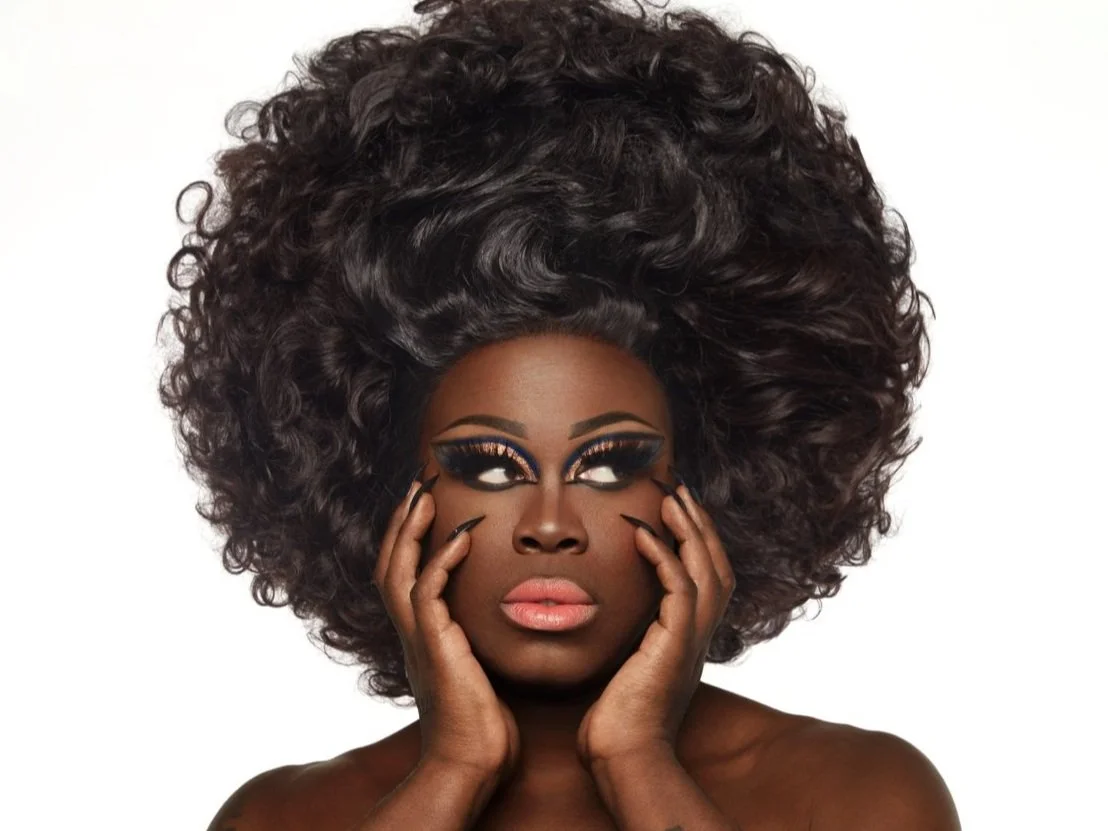
Georgia native Bob the Drag Queen knew the spotlight was made for her
The drag superstar will perform at Atlanta Symphony Hall on Saturday.
This excerpt is posted with permission via the AJC.
Bob the Drag Queen wears many hats. She recently launched a clothing line, owns a cosmetic brand and is currently touring with Madonna. Earlier this year, she dropped an EP “Gay Barz.” The performer, podcaster and comedian admits she has a lot on her plate. But she wouldn’t trade it for anything.
“It’s fun, though,” she said via Zoom. “It’s easier to maintain than it seems.”
This week, Bob the Drag Queen will perform a stand-up comedy set at Atlanta Symphony Hall as this year’s Party with Impact comic. For Bob, the show is a chance to return to her roots, literally and figuratively: comedy is her first love and she always enjoys visiting her hometown. The Columbus native credits her time at Morrow High School for fueling that knack for performing arts.
Bob was crowned the season eight winner of “RuPaul’s Drag Race” in 2016. Since then, the drag superstar has hosted television shows (including the Peabody Award-winning “We’re Here”), performed several comedy specials and continues to have the unabashed confidence that fans fell in love with. She’s looking forward to sharing that with the Atlanta audience during the show.
Although Bob has lived in Los Angeles for three years, she can see herself eventually moving back to the South.
“My family still lives here — in Henry County,” the 37-year-old said. “I just love having a chance to go back to Atlanta, seeing friends from high school, seeing friends from college, but also, you know, I was like an adolescent in Atlanta. I moved to Columbus by the time I was an adult when I was 18, so I never really had much adult life in Atlanta. A part of me always feels a little bit like a kid again when I’m back in Atlanta.”
Bob describes herself as a “stand up comedian through and through” who has found joy in making people laugh for nearly 15 years.
“These are just my thoughts being spewed out to you all in a way that I find humorous...,” she says. “I usually think of a premise that I find a little bit interesting and then I find a way to make it funny. For example, I talk about, misogyny in the gay community. I was thinking about how a lot of these gay guys think they’re above misogyny or above being shady to people because they’re a marginalized group themselves, so I just go into that and find the humor in it.”
Bringing joy to others during a year where anti-drag legislation seemed ubiquitous isn’t an easy feat. A law in nearby Tennessee, which placed drag performers in the same category as strippers and prohibited public performances outside of an adult club, was found unconstitutional in June.

The Dancer: The beautiful rise and tragic fall of Gerard Alexander
The drugstore stood dark, its parking lot empty, as the two homeless men approached.
For them, it was a perfect time to pick up a few items. It didn’t matter that the store was closed. They were there to dumpster dive — to rummage through what other people consider garbage to try to find something salvageable.
Gerard loved to dance from an early age and found a mentor to shape his talent during his chaotic youth. Later Gerard was prominently featured in the 1999 book "Vital Grace: The Black Male Dancer." (Photographer Joanne Savio, choreographer Duane Cyrus)
This excerpt is posted with permission via the AJC.
The drugstore stood dark, its parking lot empty, as the two homeless men approached.
For them, it was a perfect time to pick up a few items. It didn’t matter that the store was closed. They were there to dumpster dive — to rummage through what other people consider garbage to try to find something salvageable.
Trey Nelson’s focus was on that task. Then he heard singing.
He looked up.
The lean older man who had joined him for the late-night foray along Atlanta’s North Druid Hills Road wasn’t just singing. He was dancing. And not just regular-person dancing. This was something else.
His dumpster diving partner was performing ballet pirouettes and graceful leaps in the parking lot.
“It was like I was watching a professional dancer on stage. That’s how good it was,” said Nelson, who remembered years of watching his sisters take lessons at the Atlanta Ballet.
He was amazed when the man — perhaps in his 50s, about 20 years his senior — slowly pulled one leg straight up in the air, resting his heel beside his ear.
“I saw that he was in his own element, in his own world,” Nelson said. “He was happy in that little space.”
In the past, the man had mentioned that he once had been an accomplished dancer. Now, Nelson could see that was no exaggerated tale from another person without a home, scratching out a life in one of Atlanta’s hidden encampments.
“He was one of us that got lost,” Nelson said. “A pretty good majority of us out there have many different talents and abilities and goals — and had something going for us at some point in life. And then something happened.”
Still, Nelson hadn’t heard the full, remarkable truth.
Gerard Alexander’s life once held extraordinary promise.
He was 19 years old when he earned a spot in one of the most iconic music videos ever made, which premiered in a prime-time special on CBS.
Seconds into the choreographed scene of Michael Jackson’s 1987 blockbuster music video “Bad,” the King of Pop and a group of dancers portraying his “tough guy” allies stare down neighborhood bullies. Jackson snaps his fingers and grinds out a couple of hip rotations. Then there’s the first big dance move.
Gerard — wearing sunglasses, a Kangol hat and a black and red tracksuit — slips in front of the most famous entertainer in the world and soars into the air, his legs in a perfect split. As the video rolls, he frequently reappears, sometimes gliding through moves alongside Jackson.
A ballet, modern and jazz dancer, Gerard would go on to perform with professional dance companies, tour in Europe, receive praise in The New York Times and grace the cover of a coffee table book on Black male dancers.
Fellow performers and choreographers called him a phenom. They were awed by his otherworldly flexibility. He had the physique and exacting discipline to make his body do what seemed impossible and the emotional intelligence to move audiences.
Some thought of him as a Black Baryshnikov, comparing him to one of the most famous male ballet dancers of the last century.
But while Gerard eagerly displayed his artistry and grace, he camouflaged deep wounds.
Gerard kept secrets.
